
Jingshan Maofeng Green Tea: 1,200 Years from Zen Temple to Your Cup
Sep 24,2026 | TeaTsy Team
Introduction
Ask most tea lovers to name a green tea from Hangzhou, and they will say Longjing (Dragon Well). Yet less than an hour from West Lake, on a forested peak in Yuhang District, grows a tea with an arguably deeper story: Jingshan Maofeng (径山毛峰). This is the tea of Jingshan Temple — a Zen monastery whose formal tea rituals, witnessed by visiting Japanese monks in the 13th century, became one of the most important sources of the Japanese tea ceremony.
This article covers what Jingshan Maofeng is, its documented history from the Tang dynasty to its 2022 UNESCO recognition, how it tastes, and how to brew it properly.
What Is Jingshan Maofeng?
Jingshan Maofeng is a hand-picked green tea grown on Jingshan (径山, "Path Mountain"), part of the Tianmu mountain range in Yuhang, Hangzhou, Zhejiang Province, at elevations of roughly 500–800 meters. "Maofeng" (毛峰) describes the style: slender, downy buds picked in early spring, typically one bud with one or two young leaves.
The mountain's frequent mist, acidic soil, and significant day-night temperature difference slow leaf growth, concentrating amino acids — particularly L-theanine — which gives the tea its characteristic sweetness and umami depth with low astringency.
Quick facts:
- Origin: Jingshan, Yuhang District, Hangzhou, Zhejiang, China
- Type: Green tea (pan-fired and baked, unoxidized)
- Harvest: Early spring, before or shortly after the Grain Rain (谷雨) solar term
- Flavor profile: Fresh chestnut and orchid aroma, brothy sweetness, gentle finish
- Cultural status: The Jingshan Tea Ceremony (径山茶宴) was inscribed by UNESCO in 2022 as part of "Traditional Tea Processing Techniques and Associated Social Practices in China"
Tang Dynasty Origins: A Monk Plants a Tea Garden
Jingshan's tea history begins with its temple. Around the 740s, during the Tang dynasty, the Chan (Zen) monk Faqin (法钦) founded a monastery on the mountain and, according to local records, planted tea for offerings and for keeping monks alert through long meditation sessions.
The connection between Jingshan and tea scholarship runs deep: Lu Yu (陆羽), author of The Classic of Tea (《茶经》) — the world's first monograph on tea — spent years in this region of northern Zhejiang in the late 8th century. A spring near Jingshan still bears his name. While historians debate exactly where each chapter was written, the tea culture Lu Yu documented was the culture of these hills.
Song Dynasty Peak: The Jingshan Tea Ceremony
By the Southern Song dynasty (1127–1279), with the imperial capital relocated to nearby Hangzhou, Jingshan Temple rose to become the first-ranked of the "Five Mountains and Ten Monasteries" (五山十刹) — effectively the most prestigious Zen monastery in China.
It was here that the Jingshan Tea Ceremony (径山茶宴) took shape: a codified ritual in which monks and honored guests gathered in a prescribed sequence of inviting, seating, whisking powdered tea, offering, and drinking. Song-era tea was not steeped loose-leaf as it is today; it was ground to a fine powder and whisked with hot water into a froth — a method that will sound familiar to anyone who has watched matcha being prepared.
The Journey to Japan
This is where Jingshan's story becomes global. In 1235, the Japanese monk Enni Ben'en (圆尔辨圆) arrived at Jingshan Temple to study Zen under abbot Wuzhun Shifan. When he returned to Japan in 1241, he carried Zen teachings, tea seeds, and firsthand knowledge of Jingshan's tea rituals. He went on to found Tofuku-ji in Kyoto, and the tea seeds he brought are traditionally credited with establishing tea cultivation in Shizuoka — today Japan's largest tea-producing region.
A generation later, another Japanese monk, Nanpo Jomyo (南浦绍明), studied at Jingshan and returned in 1267 with tea utensils and ritual texts. Japanese tea historians widely acknowledge these transmissions as foundational inputs to what evolved, over the following three centuries, into chanoyu — the Japanese tea ceremony refined by masters like Sen no Rikyū.
To be precise and fair: the Japanese tea ceremony is a Japanese creation, shaped by Japanese aesthetics of wabi-sabi over centuries. But its root stock — powdered green tea, the whisking method, and the ritual grammar of serving tea in a Zen context — traces directly back to Song-dynasty Jingshan. In 2022, UNESCO recognized this heritage by including the Jingshan Tea Ceremony in China's inscription of traditional tea practices.
Decline and Revival
Jingshan tea faded from prominence after the Song, as temple fortunes declined and Chinese tea culture shifted from whisked powder to steeped loose leaf during the Ming dynasty. For centuries, Jingshan Maofeng remained a local tea, well-regarded in Zhejiang but little known outside it.
Revival began in the late 1970s, when Zhejiang agronomists restored historic tea gardens on the mountain and standardized modern Jingshan Maofeng production. The tea has since earned China's national protected geographical indication status, and the reconstructed Jingshan Temple once again hosts tea ceremonies for visitors and researchers.
How to Brew Jingshan Maofeng
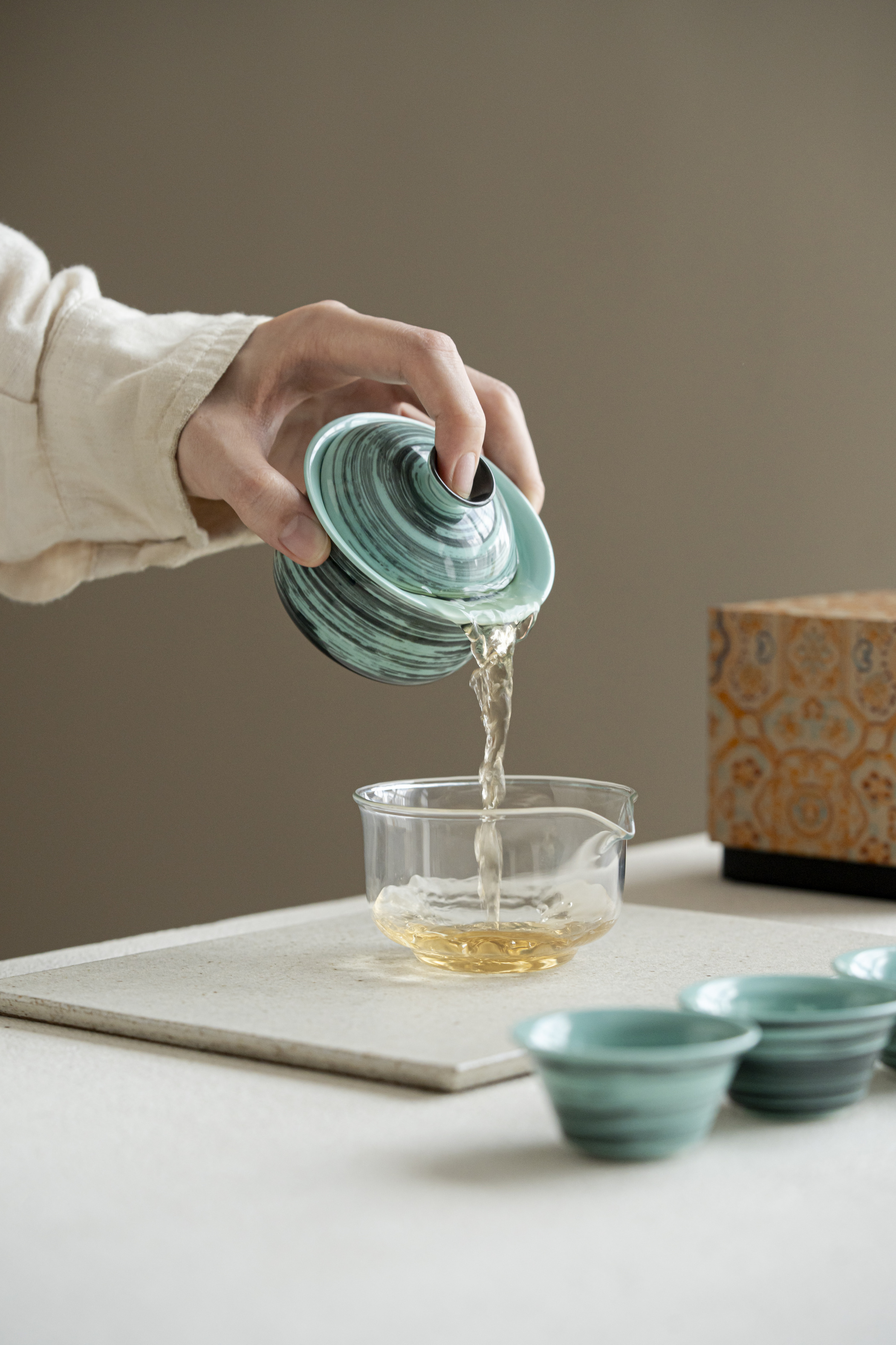
Like most delicate spring green teas, Jingshan Maofeng rewards restraint:
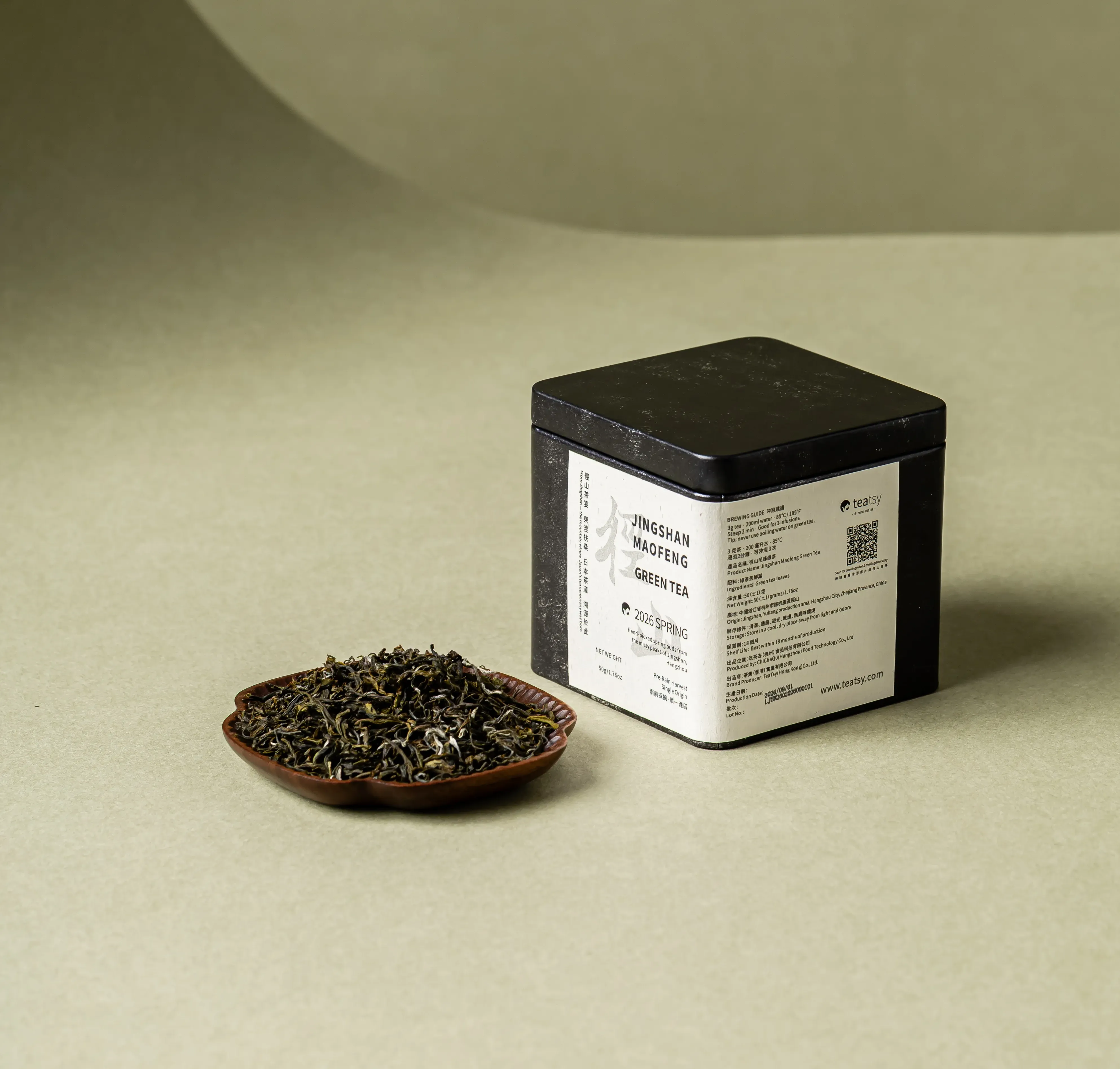
- Leaf: 3 g per 200 ml (about 1 tablespoon per cup)
- Water: 85°C / 185°F — never boiling, which scorches the buds
- Time: 2 minutes for the first infusion
- Infusions: Good for 3 steeps; extend each by 30–60 seconds
Watch the buds unfurl and stand upright in a glass — locals call this "the forest rising."
Tasting Jingshan's Story with TeaTsy
At TeaTsy, we source our Jingshan Maofeng directly from the Jingshan production area in Yuhang, Hangzhou — picked in spring, pan-fired in small batches, and sealed at 50 g to preserve the freshness that defines this tea.
We chose Jingshan Maofeng for our collection for the same reason we design everything at TeaTsy: because Chinese tea culture is best shared not as a museum piece, but as a living, drinkable story. When you whisk matcha in Kyoto or steep sencha in a Tokyo café, you are drinking a tradition that walked down this mountain eight hundred years ago. With a tin of Jingshan Maofeng, you can taste where it started.
[Shop Jingshan Maofeng Green Tea →]
FAQ
Is Jingshan Maofeng the same as Huangshan Maofeng? No. "Maofeng" describes a downy-bud style shared by several teas. Huangshan Maofeng comes from Anhui Province; Jingshan Maofeng comes from Hangzhou, Zhejiang, and has its own distinct terroir and history.
Did the Japanese tea ceremony really come from Jingshan? The Japanese tea ceremony developed in Japan over centuries, but its foundational elements — powdered tea, whisking, and Zen ritual context — were transmitted from Jingshan Temple by Japanese monks Enni Ben'en and Nanpo Jomyo in the 13th century. This link is recognized by tea historians in both countries and reflected in UNESCO's 2022 inscription.
Does Jingshan Maofeng have caffeine? Yes. As a spring bud green tea it contains moderate caffeine (roughly 30–40 mg per cup), balanced by naturally high L-theanine, which many drinkers experience as calm alertness.
When is the best Jingshan Maofeng harvested? The most prized leaves are picked before Qingming (early April, "Ming Qian") or before Grain Rain in late April ("Yu Qian"). Our current batch is a Pre-Rain harvest.
Comment