
Fragrance in the Empty Valley: The Quiet Refinement of the Orchid — and a Tea Set That Travels With It
Jul 15,2026 | TeaTsy Team
CHINESE LITERATI TRADITION · HAND-PAINTED PORCELAIN · GONGFU TRAVEL BREWING
July 15, 2026 · 8 min read · TEA CULTURE · PRODUCT STORY
When a Flower is Also a Portrait
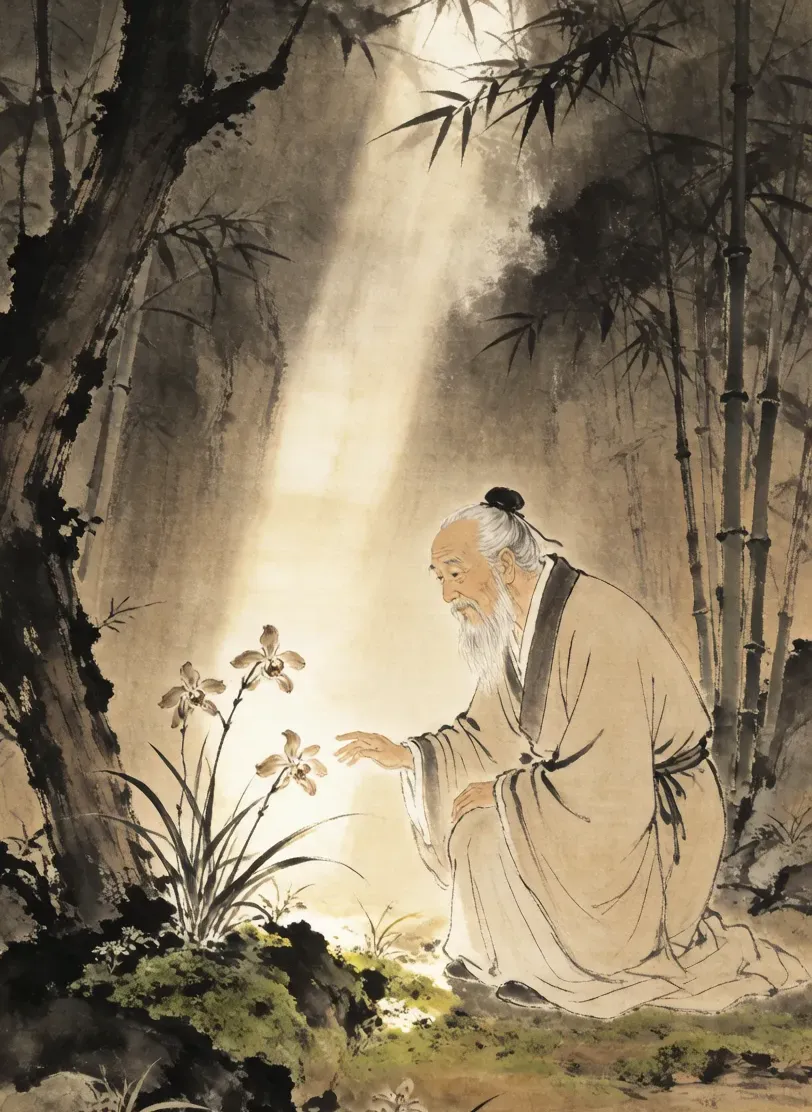
There is an old story that when Confucius came upon orchids blooming, unregarded, deep in an empty valley, he stopped his cart. Here was a flower of the highest fragrance, he observed, opening its blossoms where no one would pass to admire them — keeping its own standard whether or not the world was watching. From that moment the orchid (兰, lán) became, in the Chinese imagination, less a plant than a mirror held up to a certain kind of person.
The literati painters who came after him understood the assignment. To paint an orchid was never simply to record a flower. It was to paint a character.
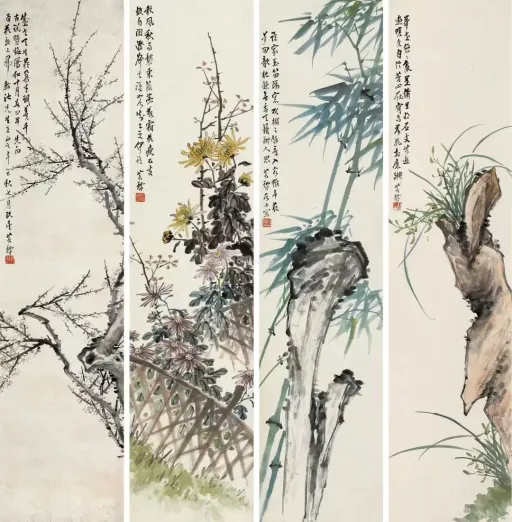
In classical Chinese culture, the orchid was one of the "Four Gentlemen" (四君子, sì jūnzǐ) — a quartet of plants, alongside the plum blossom, the bamboo, and the chrysanthemum, that scholar-painters used as silent emblems of moral character. Each stood for a virtue. The orchid stood for the quietest of them: refinement without display, integrity kept in private, a fragrance offered freely to an empty room. It was the gentleman who does not need an audience to remain himself.
"The orchid keeps its fragrance whether or not anyone passes to notice it — a standard held in private, not for show."
The Four Gentlemen and the Literati Brushstroke
The Four Gentlemen tradition took formal shape during the Song (960–1279) and Yuan (1271–1368) dynasties, when a class of scholar-officials began to treat plant subjects as visual shorthand for Confucian virtues. The choice of subject was never merely decorative; it was a claim about the painter's own inner life.
The orchid, in particular, became a test of the brush. A few slender leaves, arced and crossing, and a single spray of blossom — nothing to hide behind, no color, no elaborate scene. Painters spoke of "writing" the orchid rather than drawing it, because the same disciplined, unhurried hand that produced good calligraphy was the only hand that could produce a convincing orchid. Too much effort and the leaves looked stiff; too little and they collapsed. The flower demanded exactly the balance of restraint and confidence that it was meant to symbolise.
The Painting on This Set
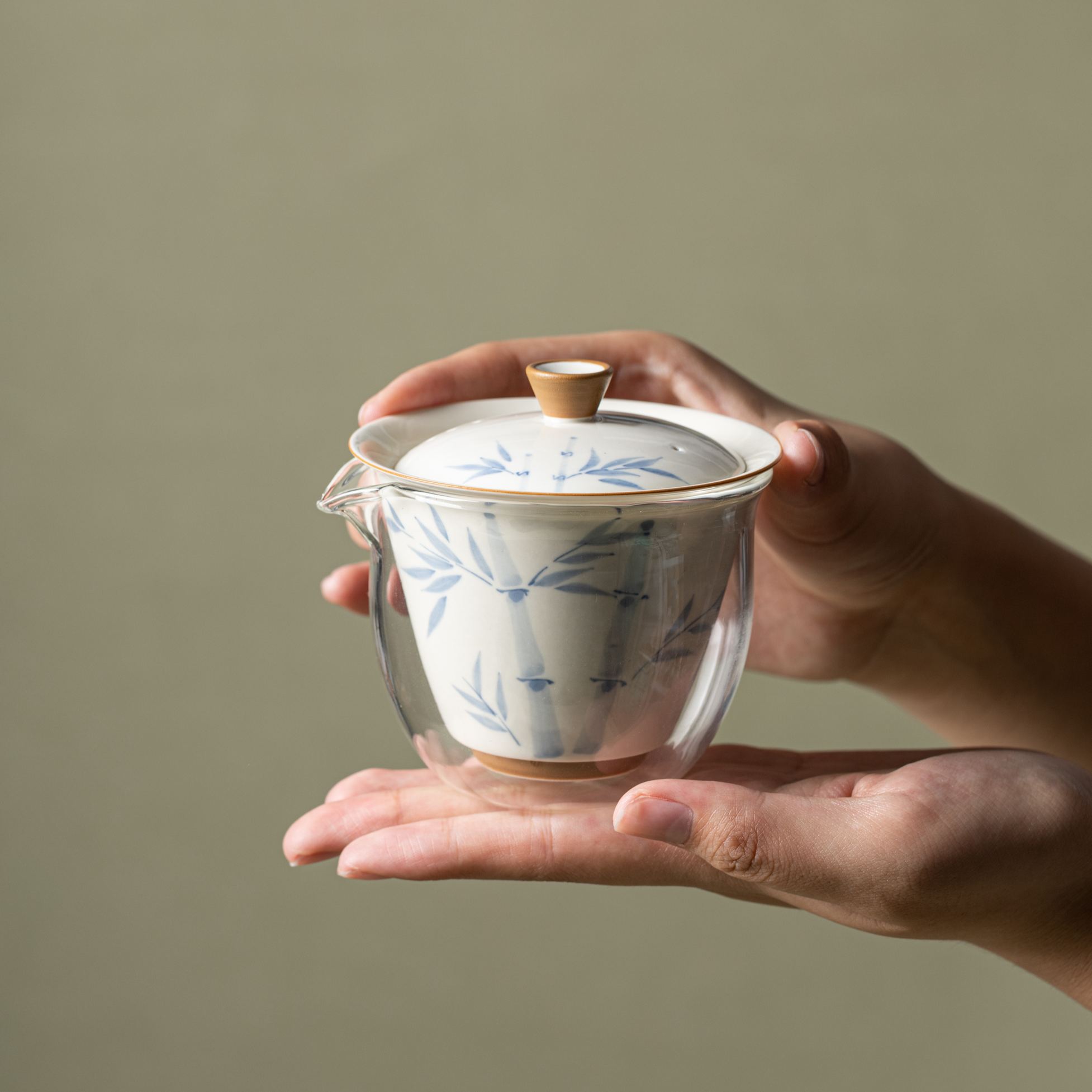
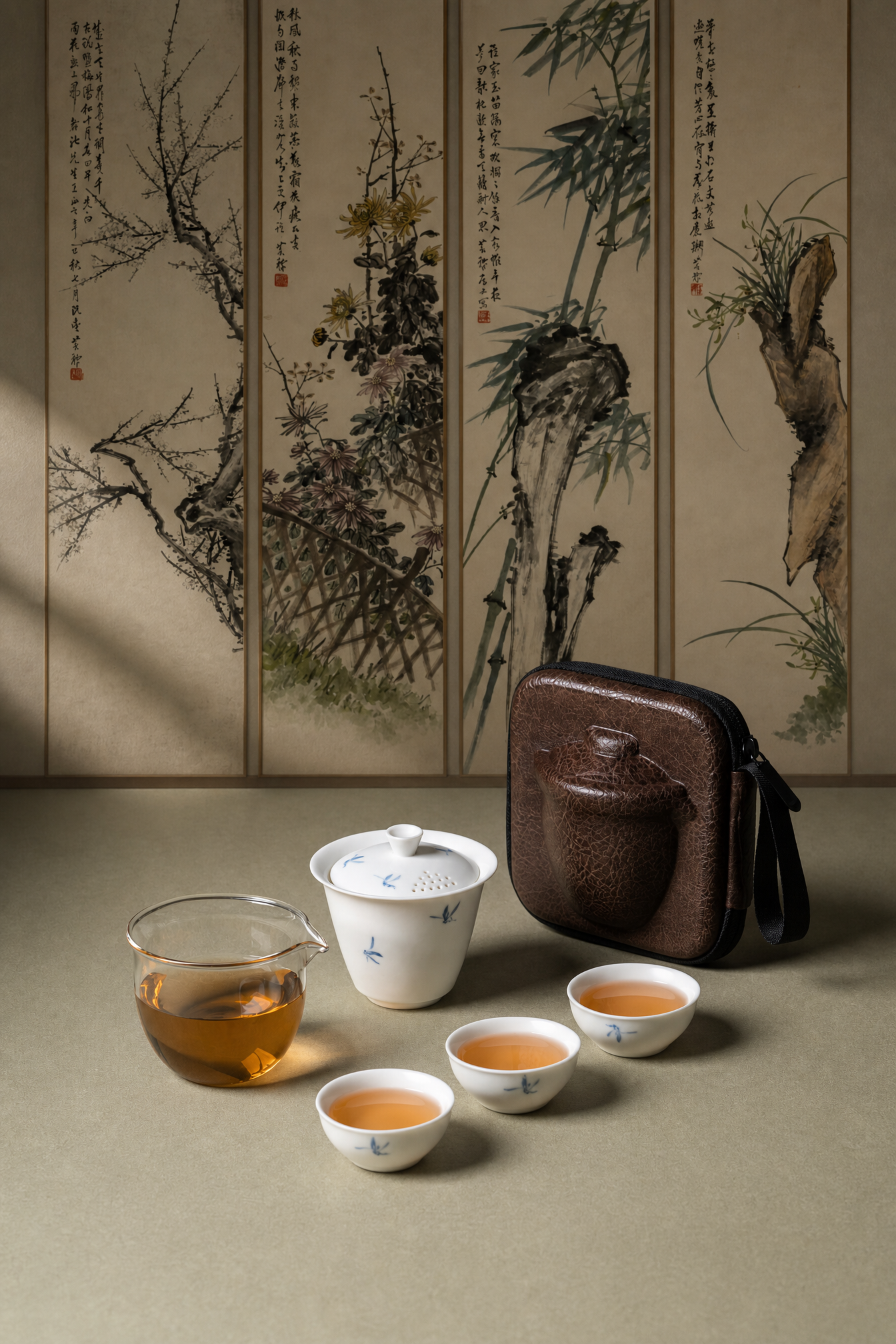
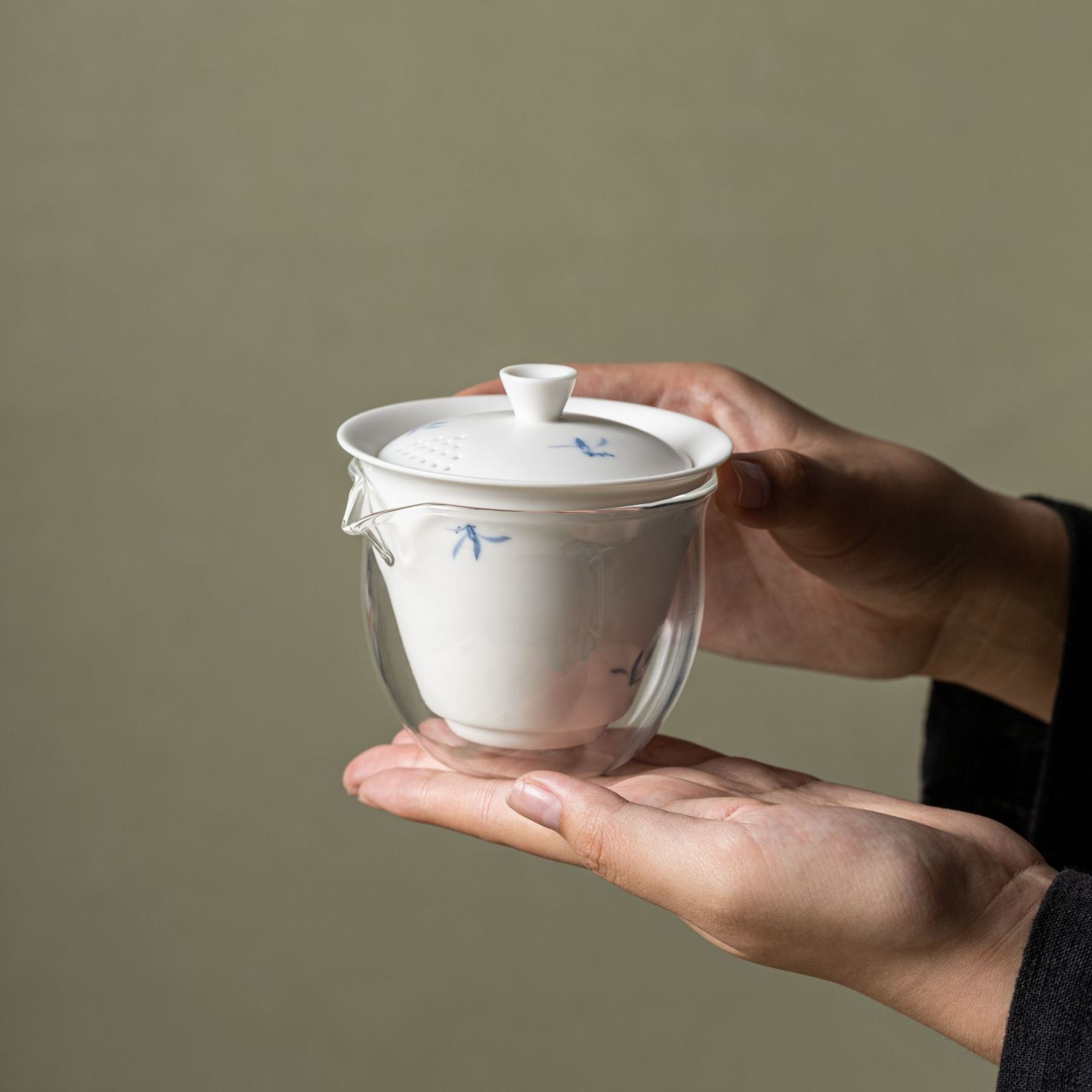
The Breeze Orchid Travel Tea Set carries that same brushwork onto porcelain. Each piece is hand-painted, so no two sets are identical — the orchid leaves sweep across the glaze in the loose, calligraphic line the literati prized, blossoms resting where the painter's hand chose to let them settle. Against the pale, quiet ground of the ceramic, the cool ink of the orchid reads the way it was always meant to: understated, deliberate, alive.
The Gaiwan: Built-In Filter, No Strainer Required
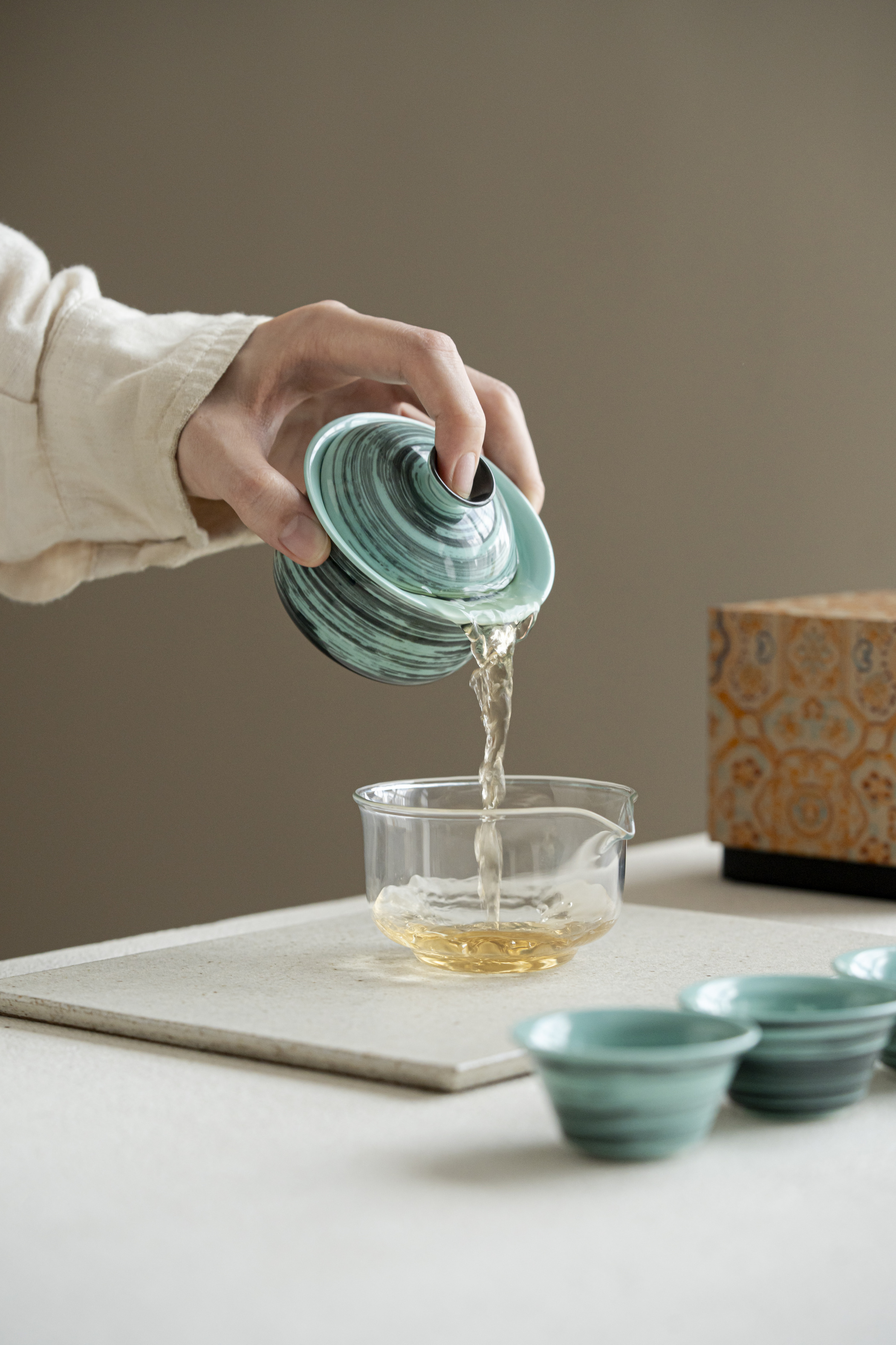
The gaiwan in this set incorporates a perimeter filter directly into the lid — a practical modification of the traditional form that removes the need for a separate strainer. A traditional gaiwan pour requires tilting the lid at just enough of an angle to hold back the leaves through a narrow gap, a technique that takes practice. The lid-filter makes this automatic, so the ritual stays intact without the learning curve competing for your attention mid-pour.
 · · ·
· · ·Why Carry a Tea Practice at All?
The real question behind a travel tea set is not about logistics — it is whether a practice survives being moved. Most rituals don't. They lean on a specific kitchen, a specific chair, a specific silence. Take them out of that setting and they thin into habit, then into nothing.
The orchid is a useful figure here too. Its whole meaning, in Chinese symbolism, is that it does not require an admiring crowd or ideal conditions to keep its fragrance. It simply continues being itself in the empty valley. The tea practice in this set is built to do something similar: the ritual is compressed but not compromised. The same water temperature, the same rinse-and-steep sequence, the same small cups — in a hotel room, in a park, at a desk in an unfamiliar city.
True presence shouldn't be left at the door when you step out of it. The Breeze Orchid is made for the person who finds that idea worth carrying.
What's in the Set
- Ceramic gaiwan with built-in lid filter — hand-painted orchid motif. Brews directly into the glass server.
- Heavy-walled glass server (pitcher) — collects the brewed tea for distribution into tasting cups without temperature loss.
- Three ceramic tasting cups — matching glaze and orchid motif, sized for gongfu-style sipping.
- Slim travel case — leather-textured exterior with zipper closure, fits all pieces securely.
- Eco-friendly kraft paper gift box + paper tote bag — ready to give.
For the Traveller Who Won't Choose Between Their Practice and Their Schedule
The Breeze Orchid is available worldwide through TeaTsy, with shipping to Singapore, Malaysia, Hong Kong, the United States, the United Kingdom, Australia, and beyond. It is a considered gift for someone who already drinks good tea — or for yourself, as the object that finally closes the gap between "I'd like to bring my tea practice with me" and actually doing so.
發表評論