
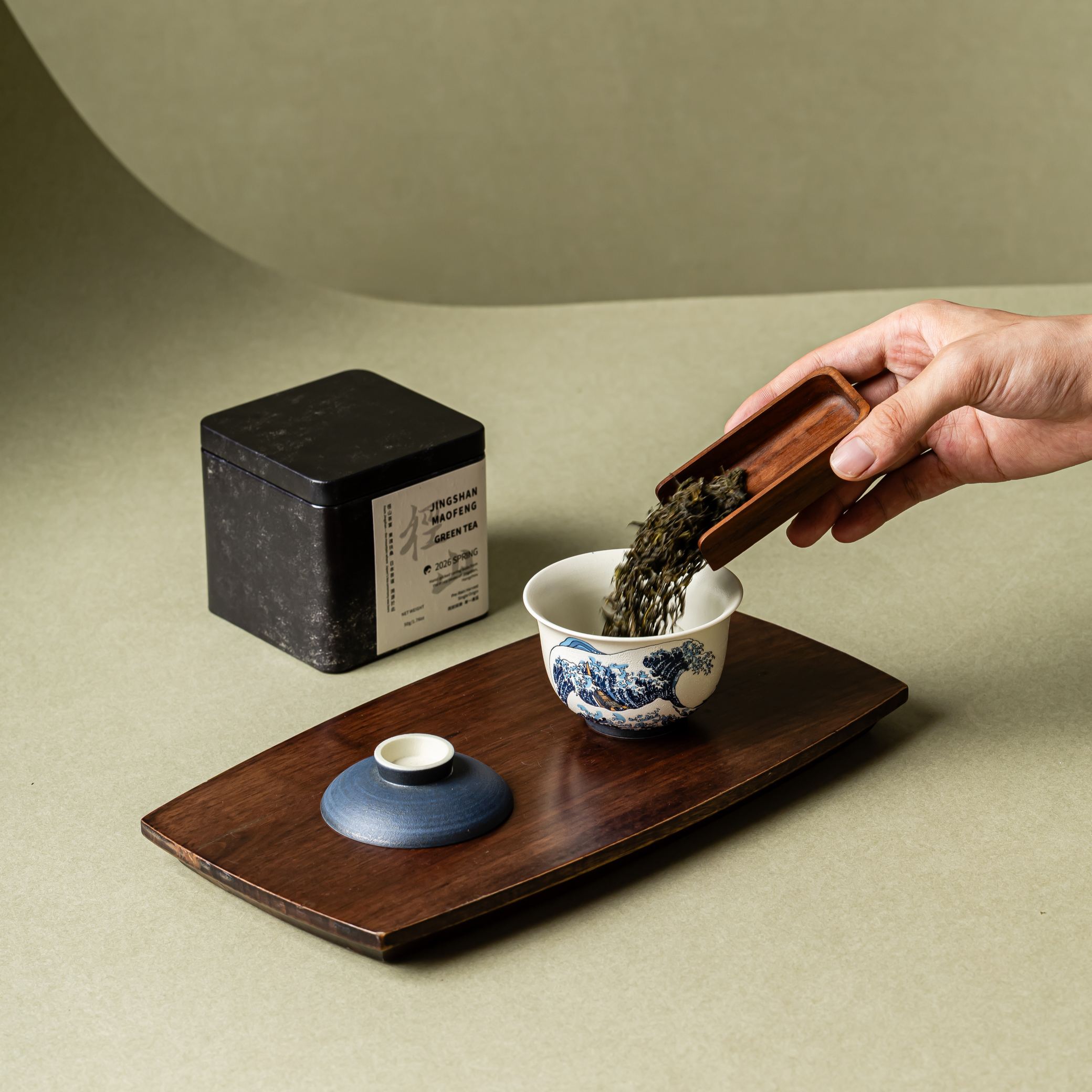
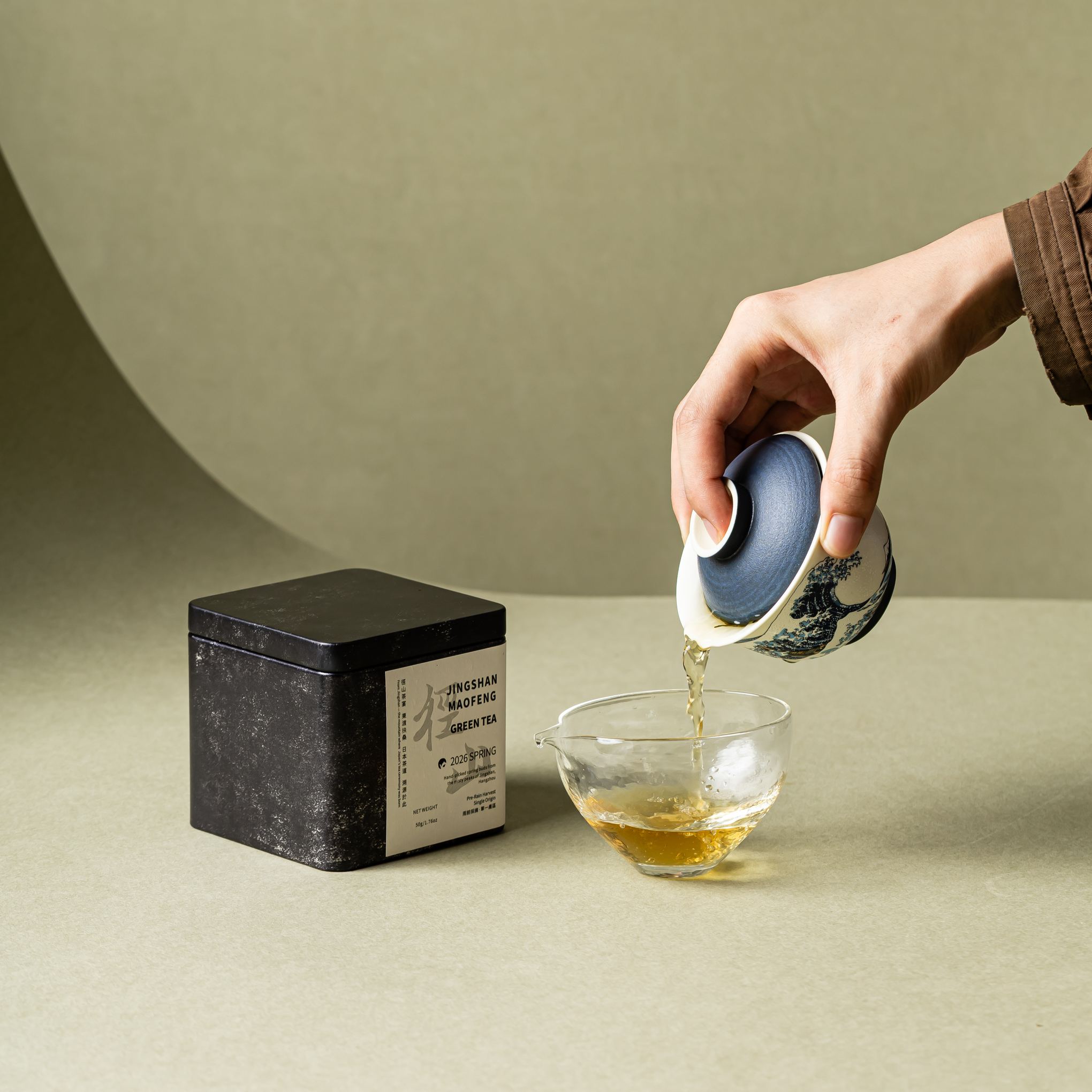
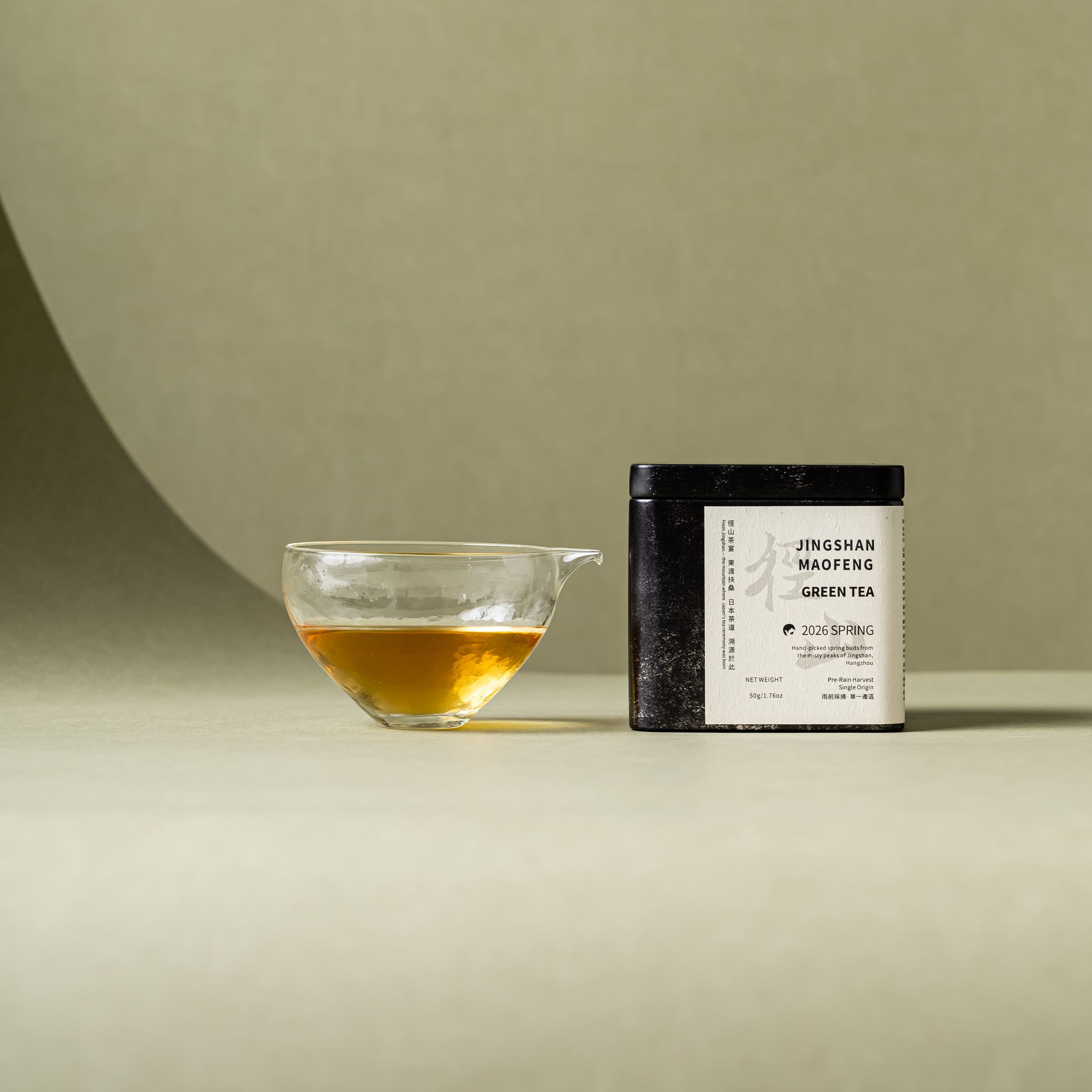
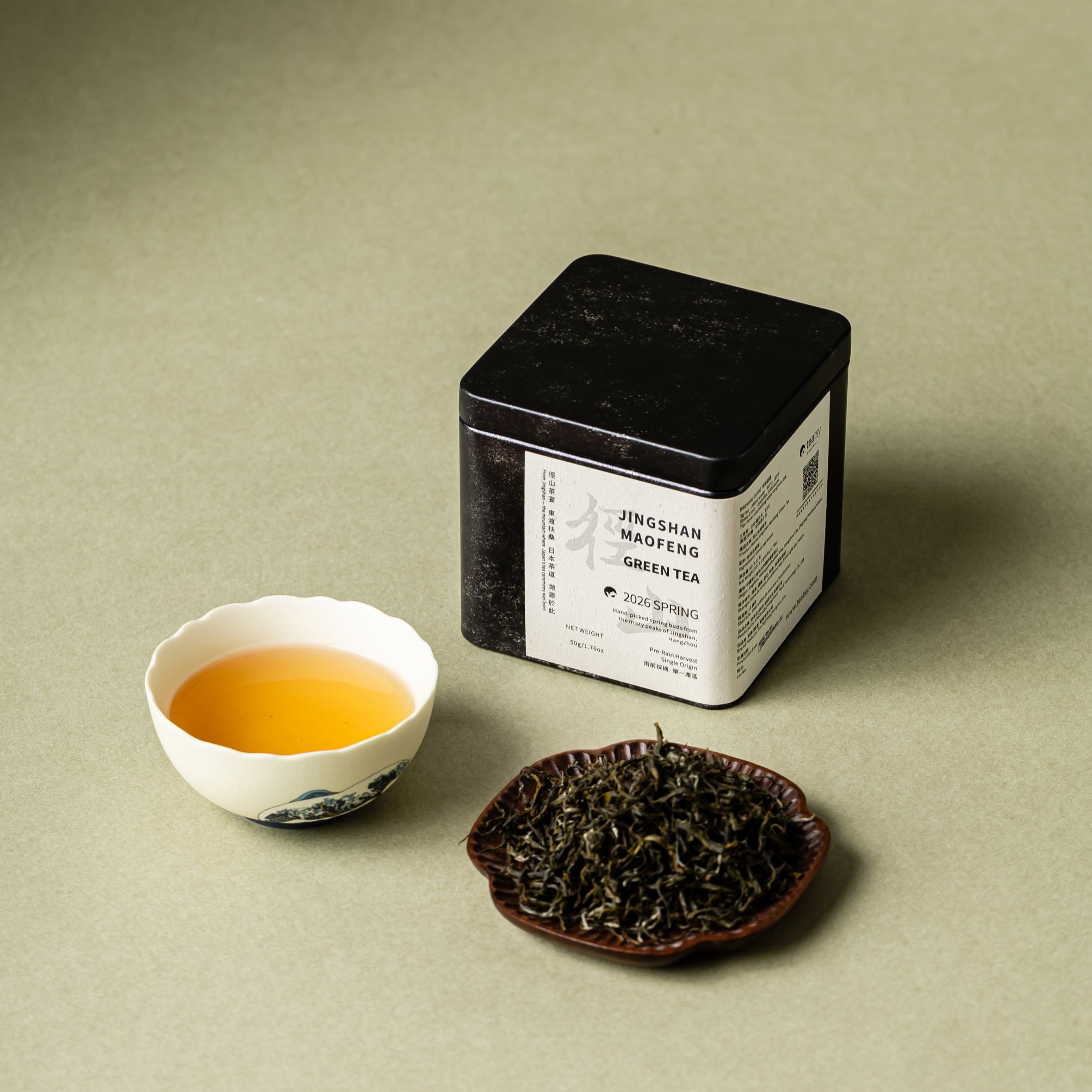
A quiet, fresh green tea from Jingshan, Hangzhou
Our 2026 spring harvest comes from Jingshan, Hangzhou, where tea culture has developed for well over a thousand years.
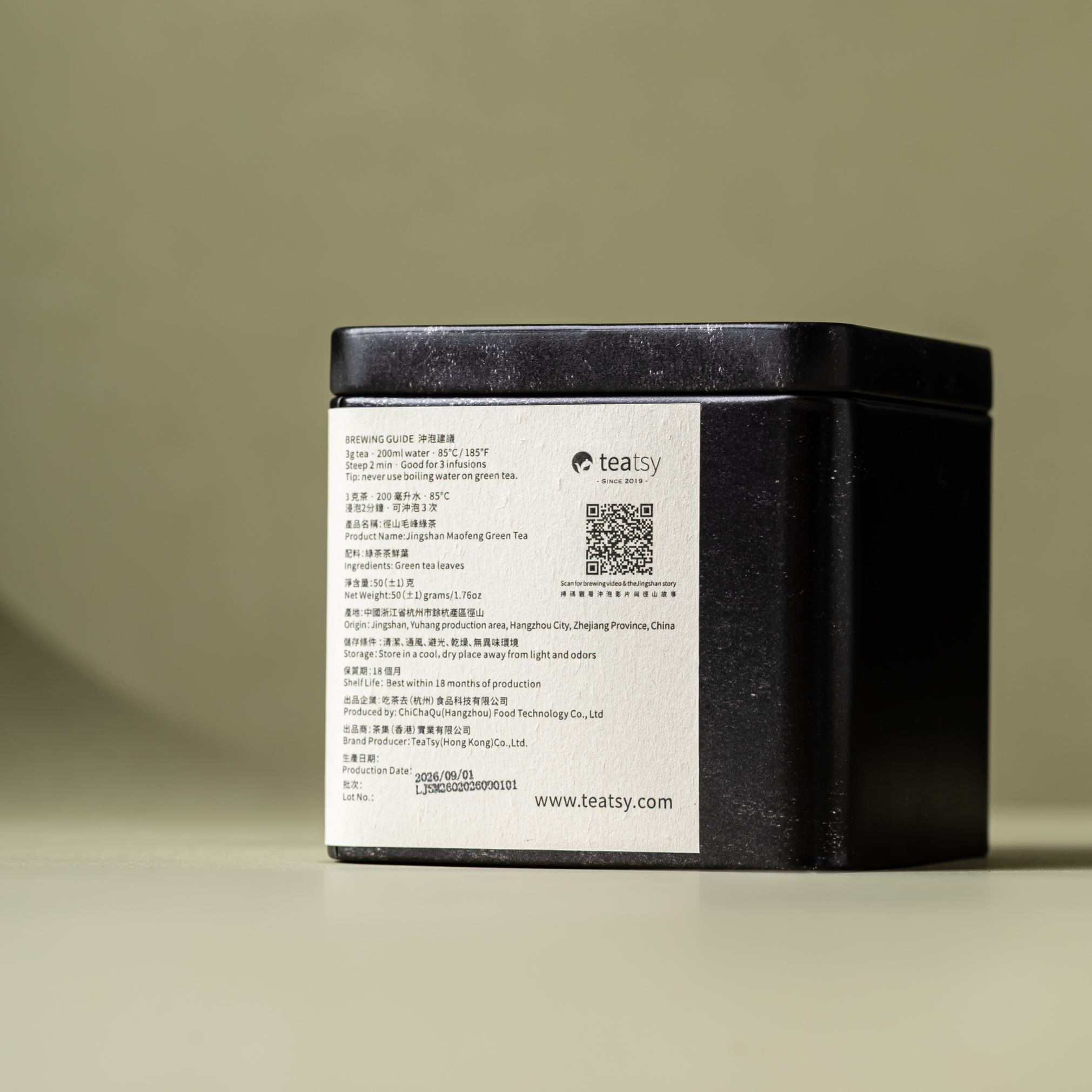
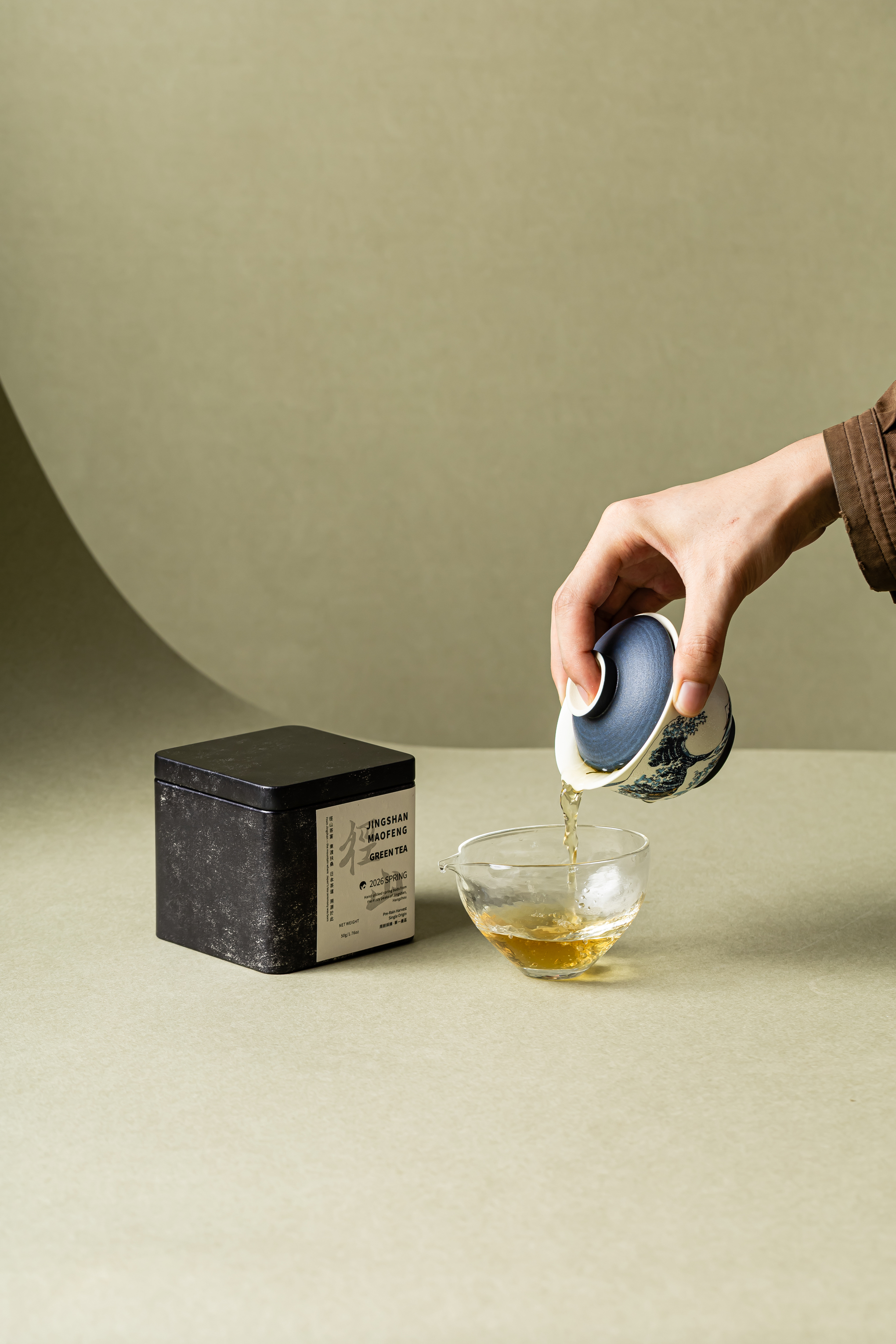
Brew it at 85°C / 185°F and the cup stays fresh and light. Three grams in 200 ml of water is an easy everyday measure, and the same leaves can be steeped up to three times.
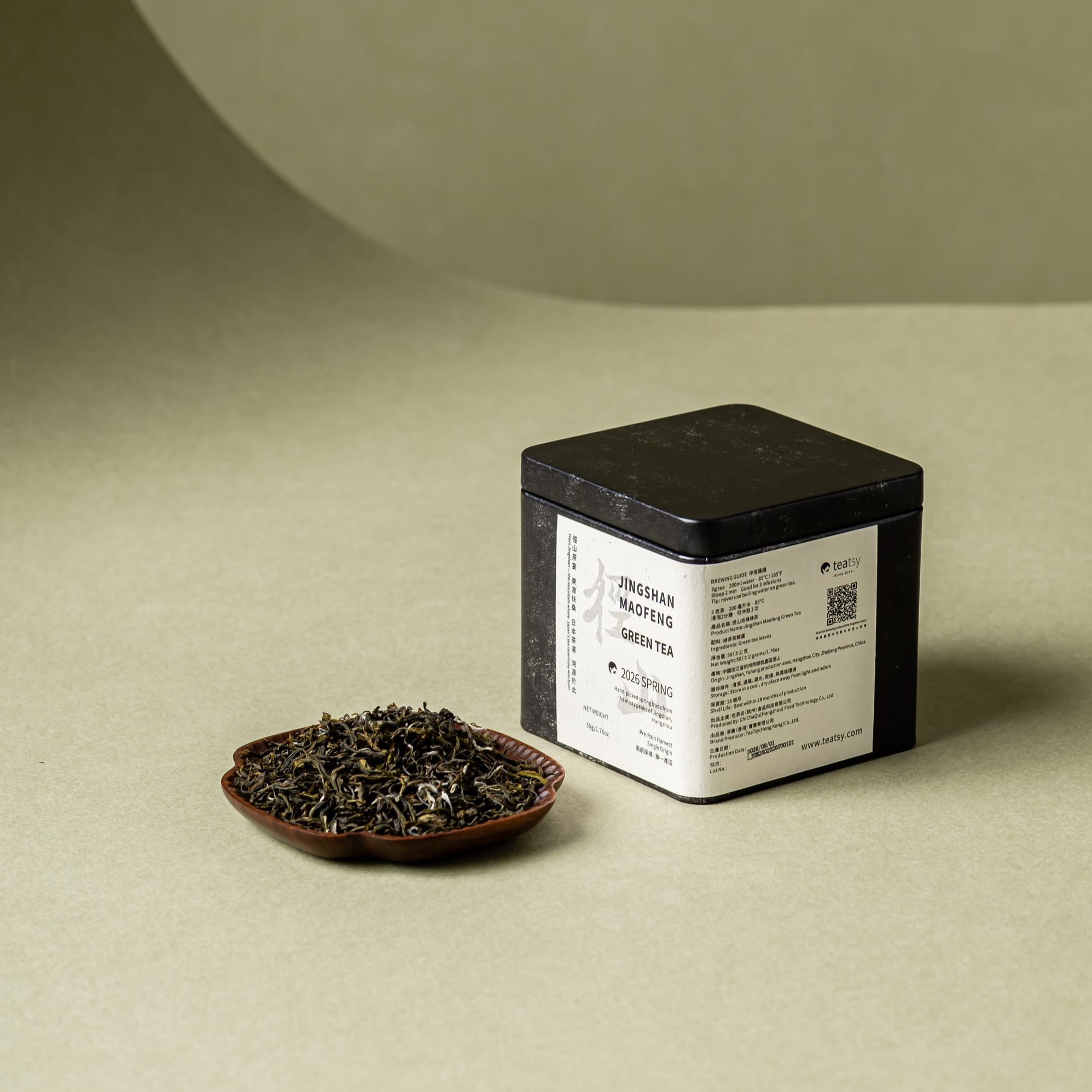
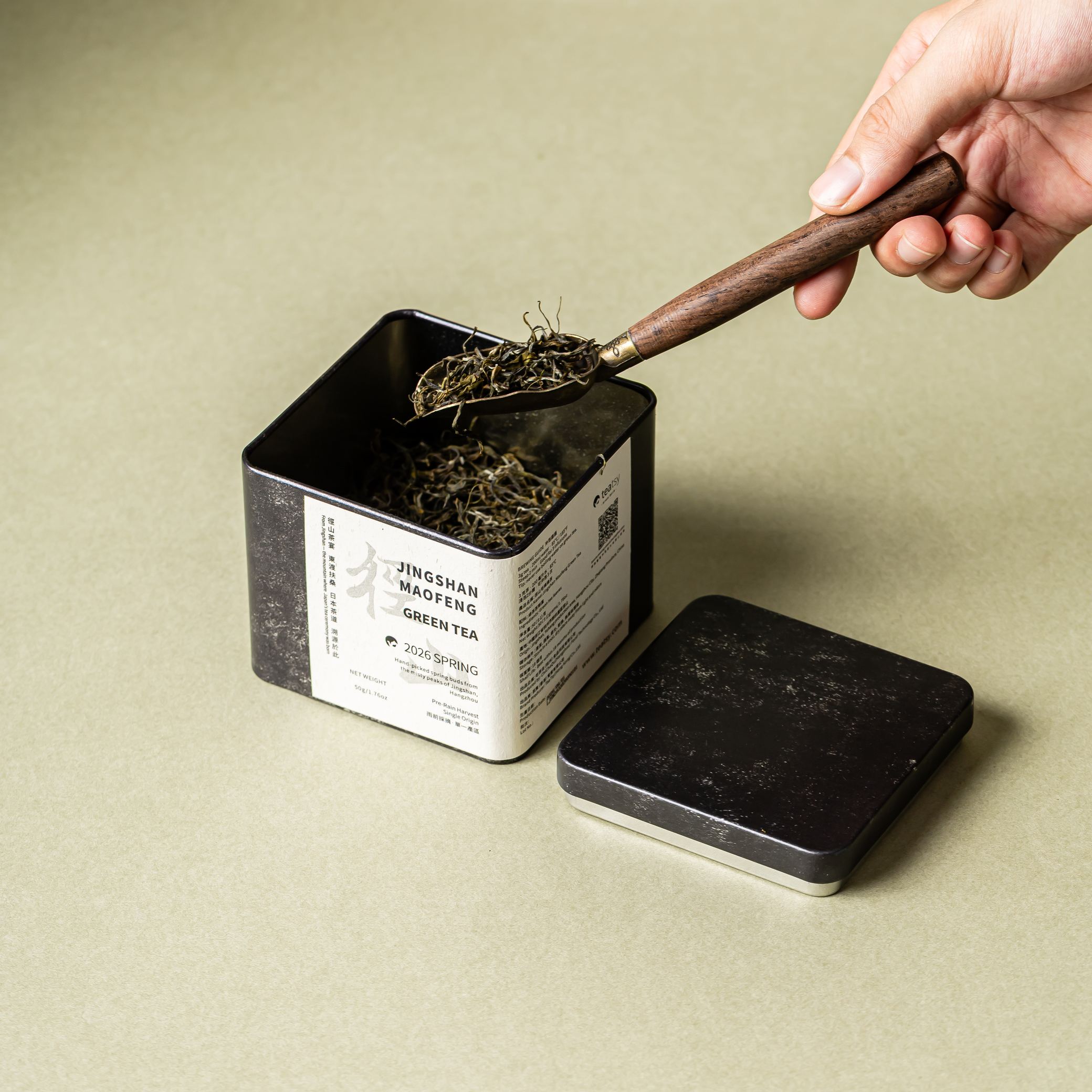
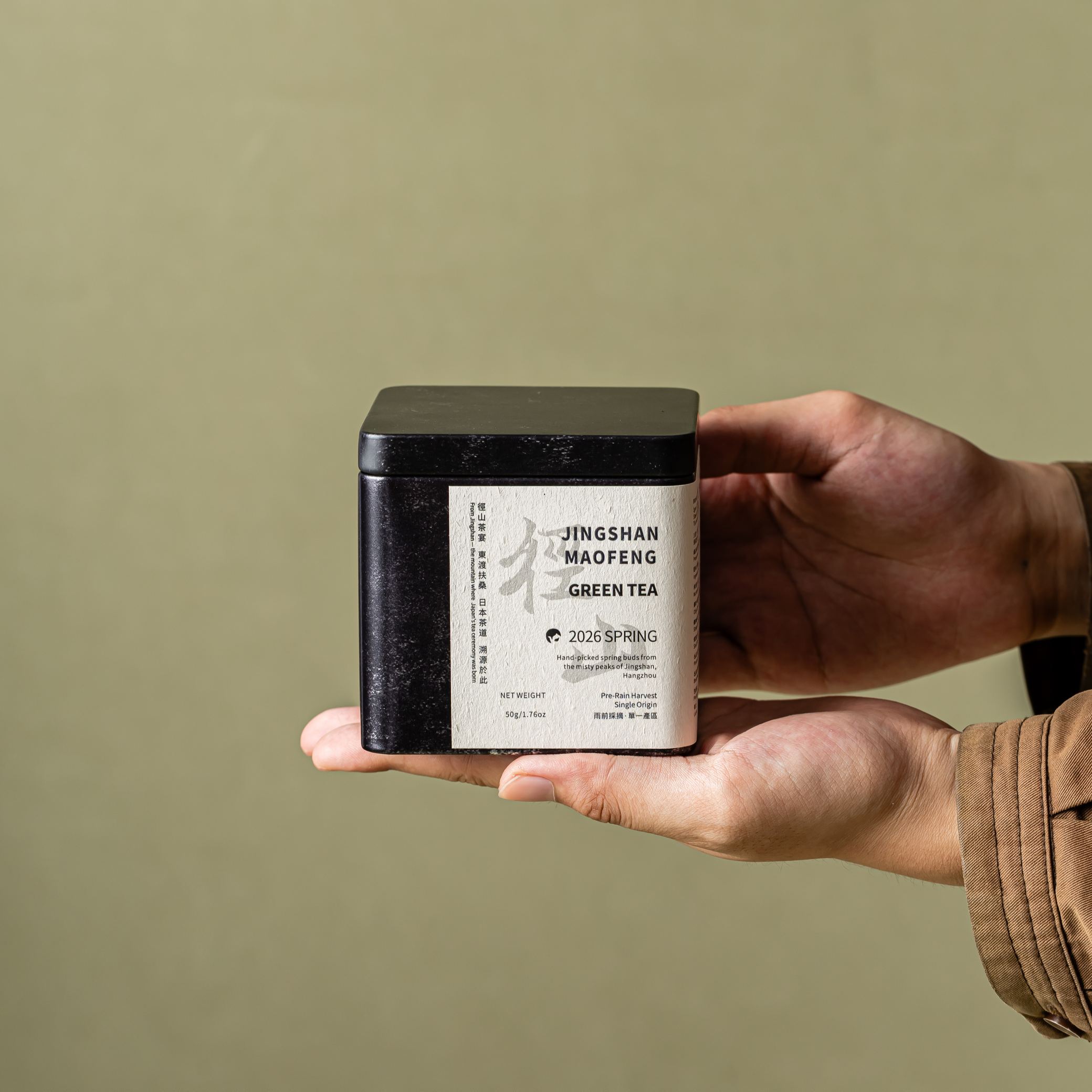
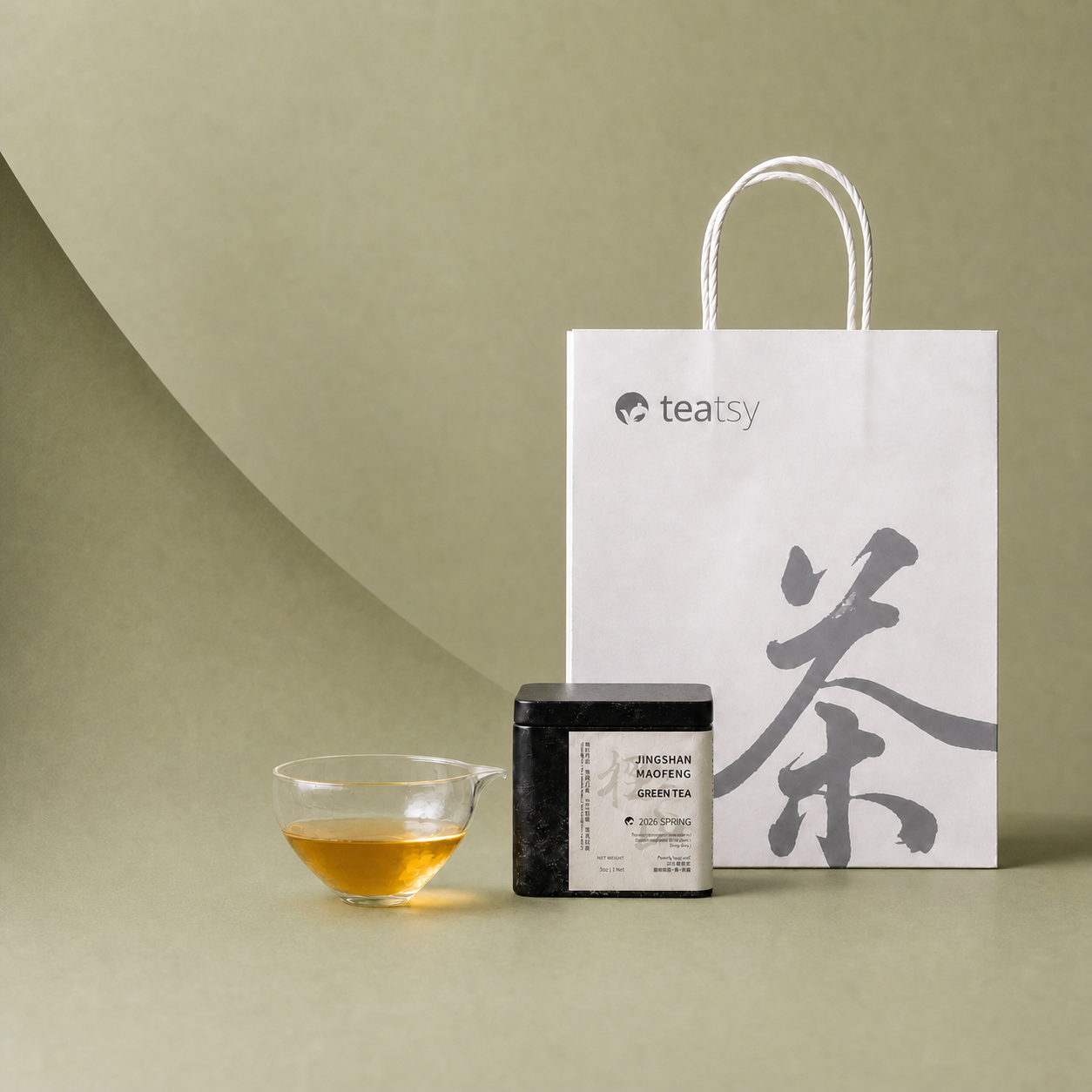
The tea ships in our 50 g metal tin, in the black-and-ivory design we use across the range.

From Jingshan: 1,200 Years of Tea Culture
Jingshan Temple was founded during the Tang dynasty, and tea became part of temple life early in its history. Over the centuries, tea cultivation, Buddhist practice, and monastic hospitality developed together on the mountain. By the Southern Song dynasty, Jingshan Temple had become one of the most important Zen monasteries in China, and its formal tea gatherings had developed into what became known as the Jingshan Tea Banquet.
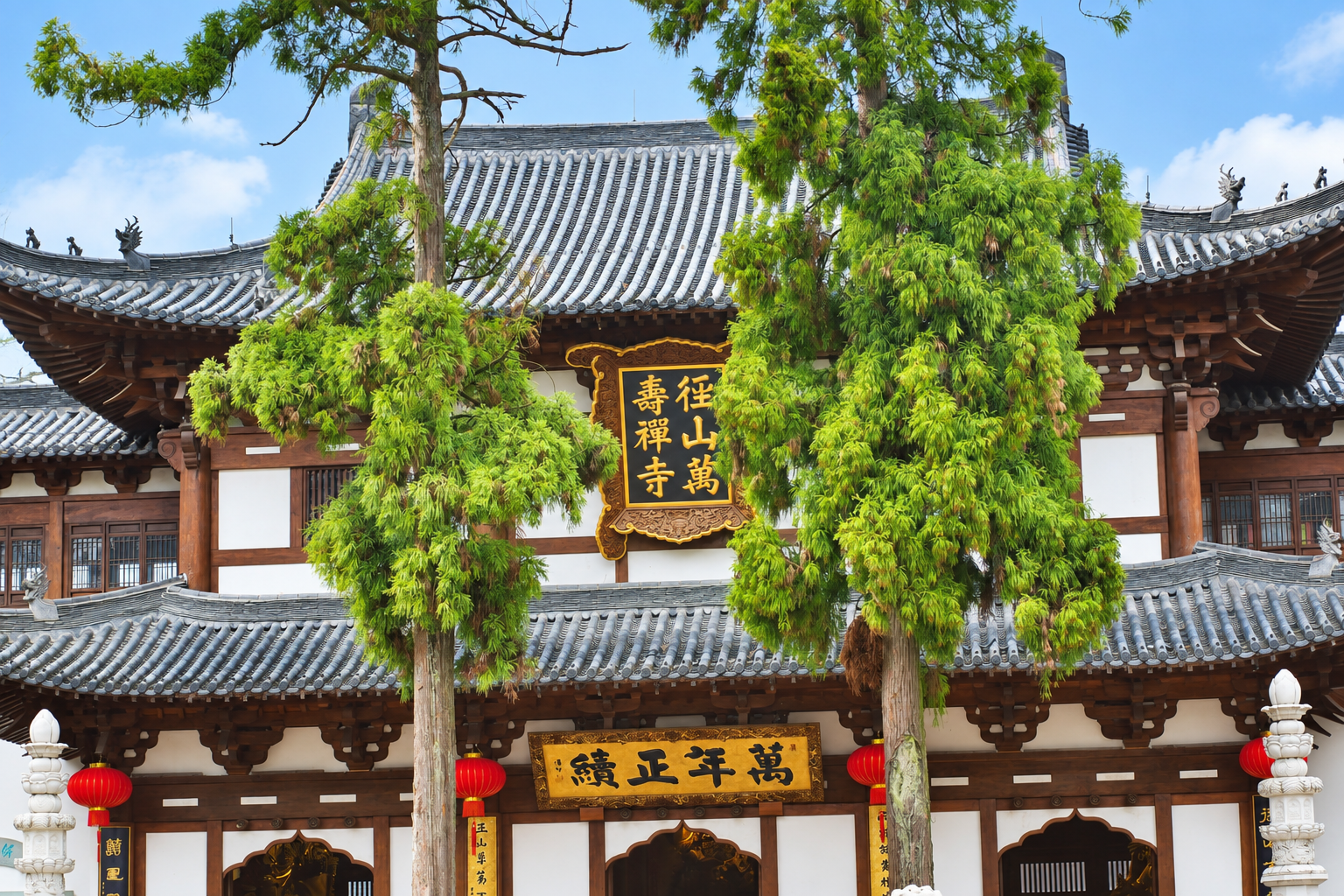
Jingshan was also an important meeting point between Chinese and Japanese Zen culture. In the 13th century, Japanese monk Enni Ben’en studied at Jingshan Temple before returning to Japan with Jingshan tea seeds and knowledge of tea cultivation, preparation, and temple tea customs. Other Japanese monks, including Nanpo Jomyo, also studied at Jingshan and carried elements of its tea culture back to Japan.
These exchanges became an important historical influence on the later development of Japanese Zen tea traditions. The Japanese tea ceremony itself developed in Japan over centuries, but Jingshan is widely remembered as one of its important historical roots.
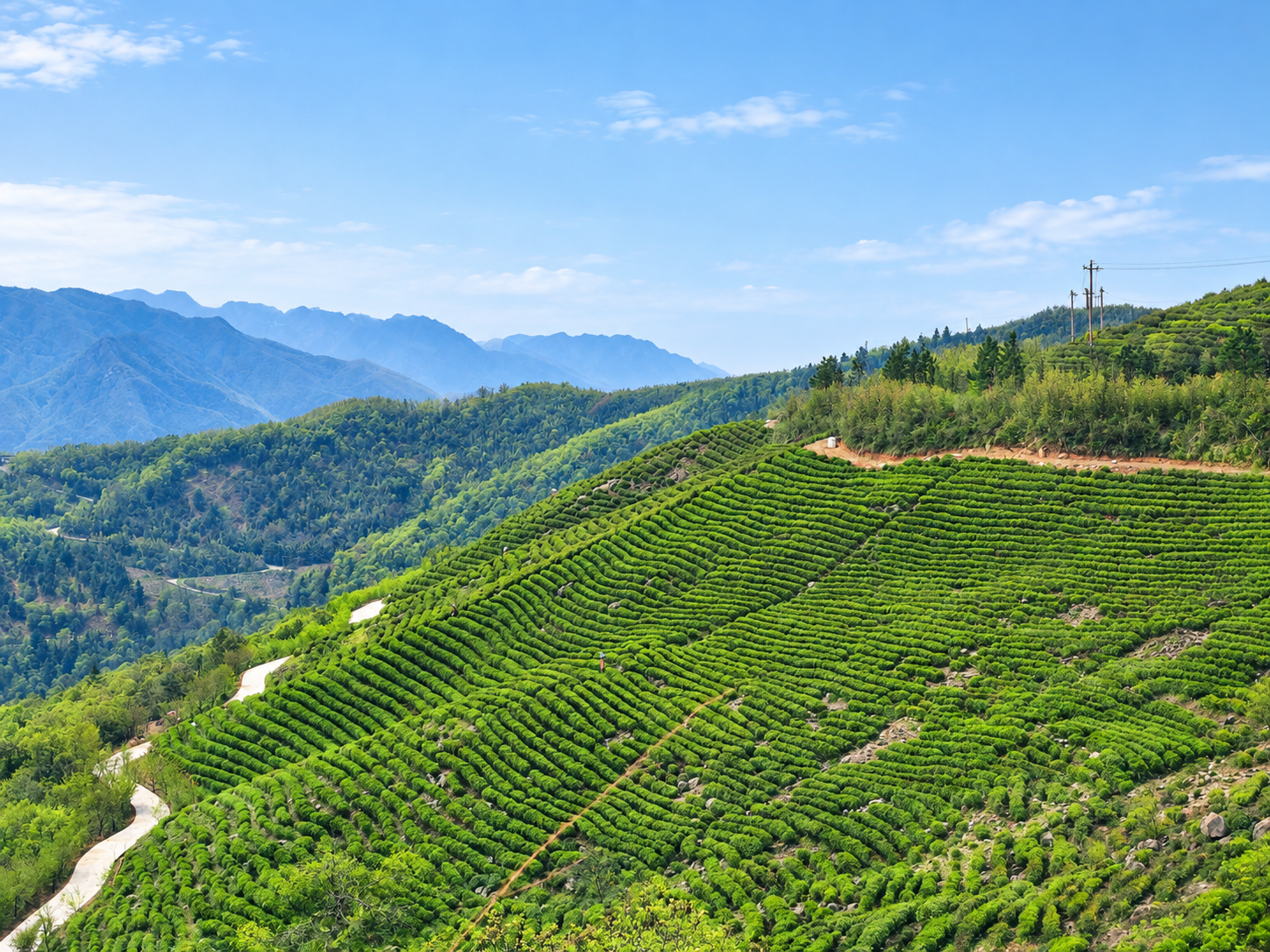
This history is the context behind the line printed on our tea tin: “From Jingshan — the mountain where Japan’s tea ceremony was born.” It reflects Jingshan Temple’s documented role as one of the important historical roots that influenced the later development of Japanese tea culture.
In 2022, the Jingshan Tea Banquet was included within “Traditional tea processing techniques and associated social practices in China,” inscribed on UNESCO’s Representative List of the Intangible Cultural Heritage of Humanity.
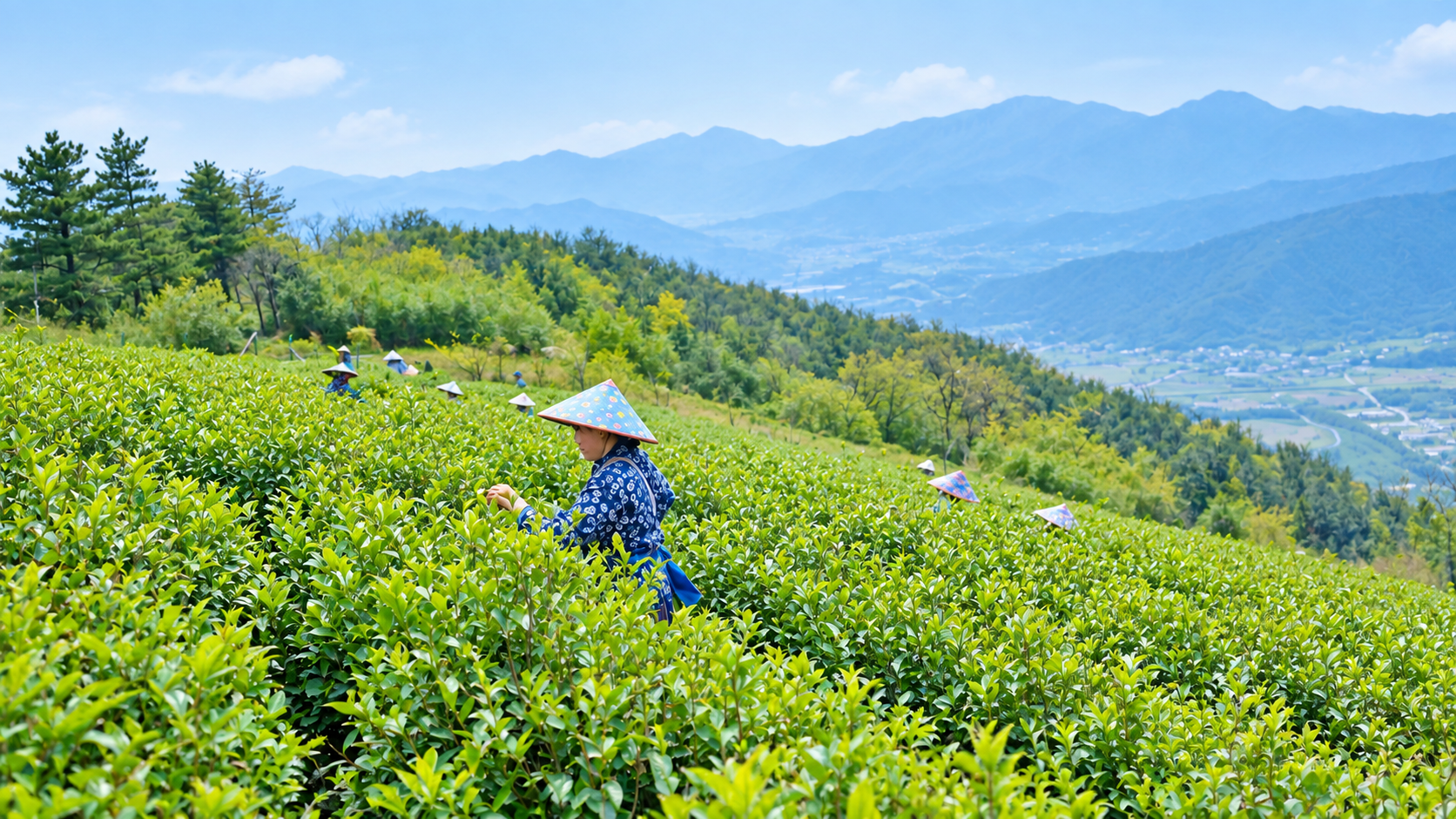
Tea is still grown across Jingshan today, carrying this long local tradition into the present.
Tender Spring Leaf, Fresh and Sweet
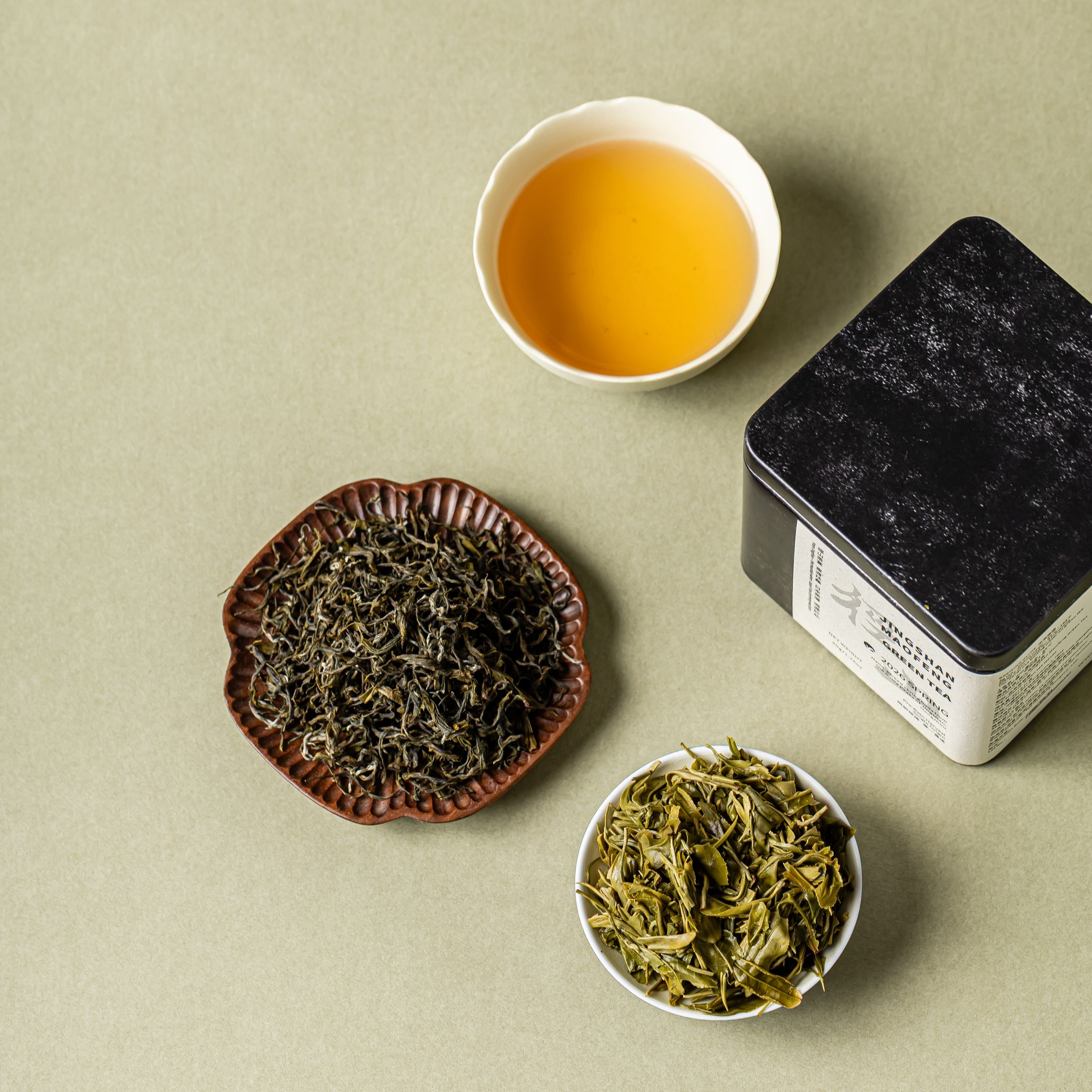
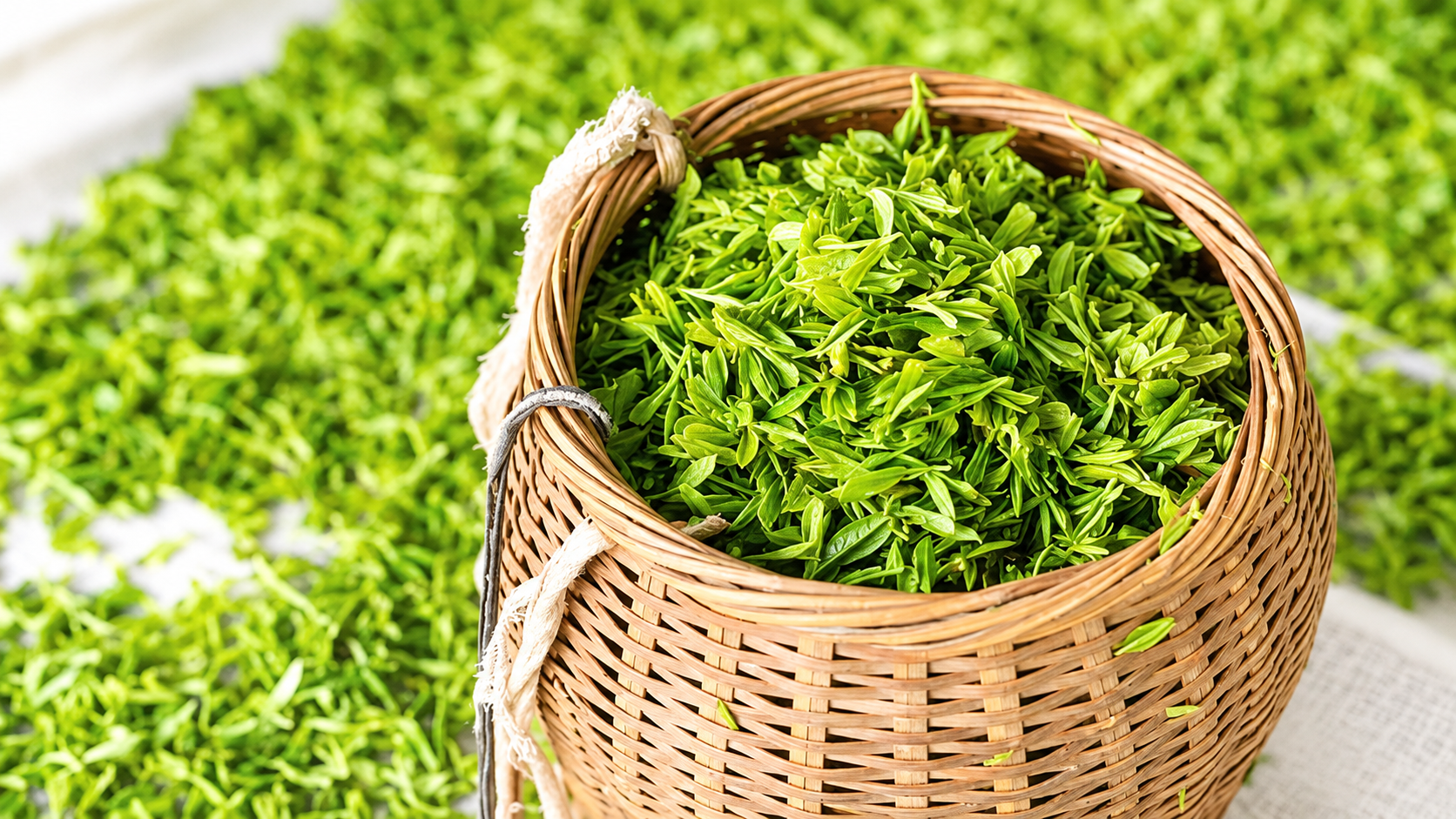
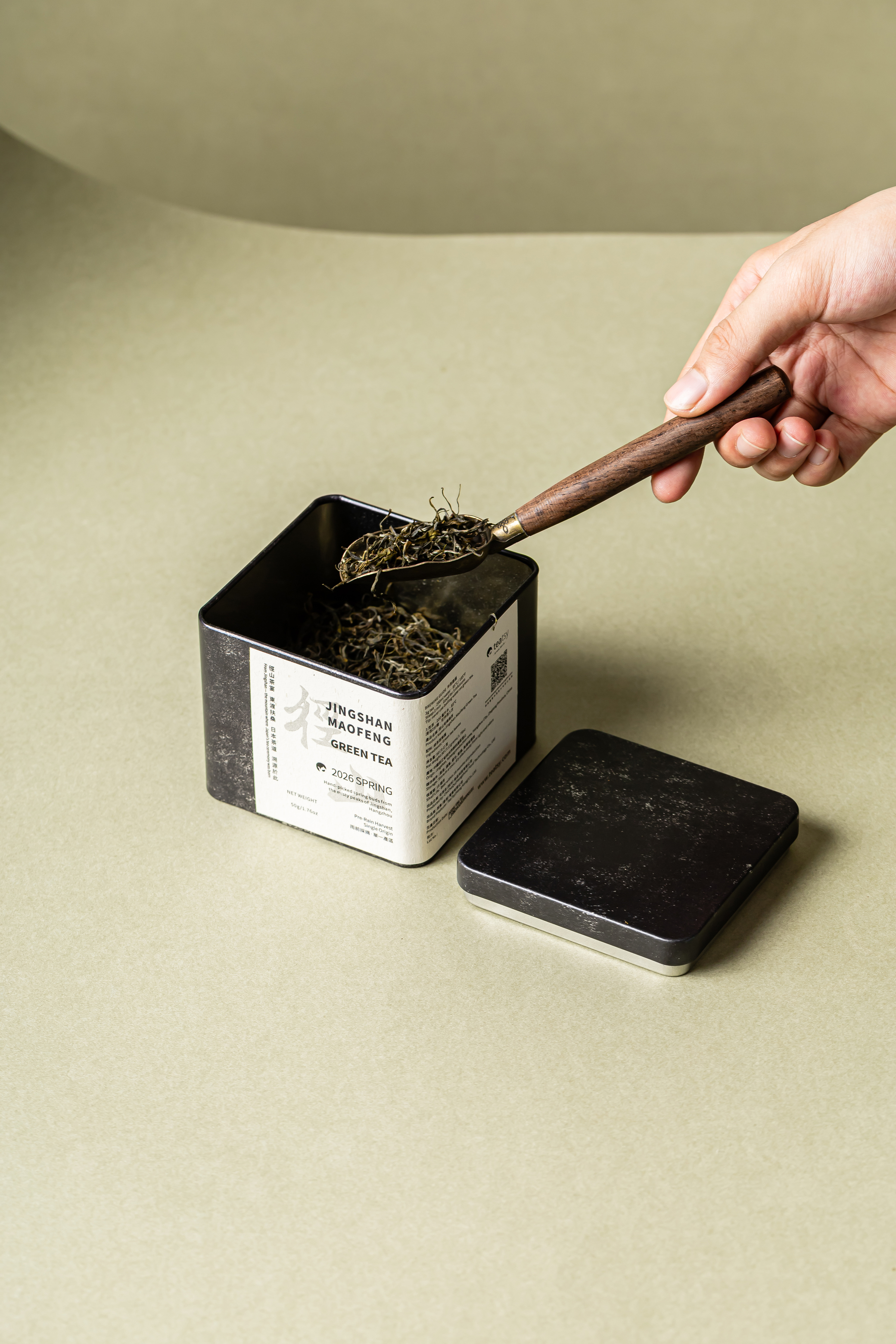
Made from tender spring leaves, this Jingshan Maofeng shows fine tea hairs across the dry leaf and a naturally green appearance. The leaves are hand-rolled during processing rather than shaped for perfect cosmetic uniformity, so variations in size, curl, and form remain visible in the finished tea.
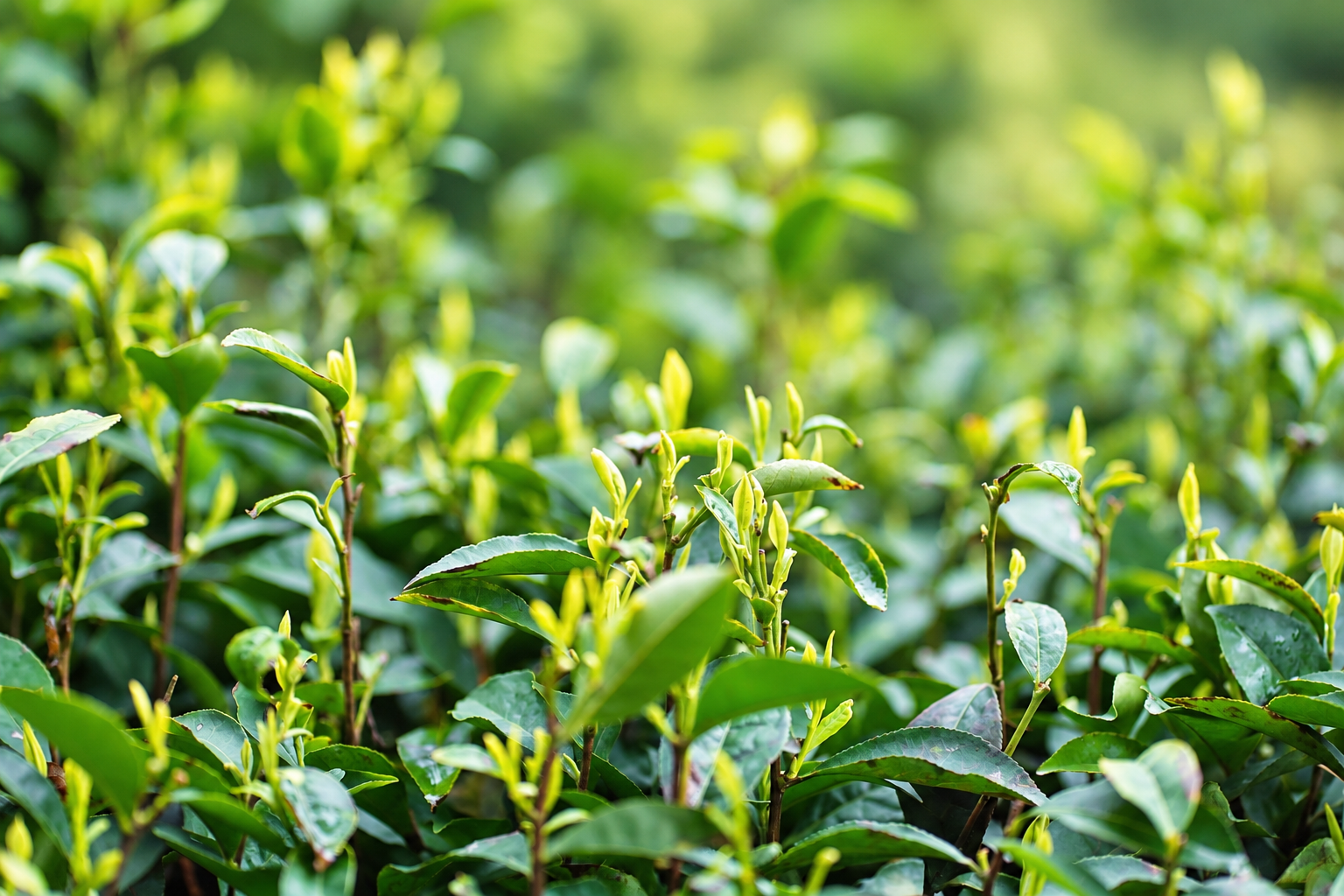
The tea is finished using a baked-green process, helping preserve its tender young-leaf aroma and fresh, refreshing character. In the cup, it is gentle and clean, with a soft natural sweetness and a lingering fresh aroma.
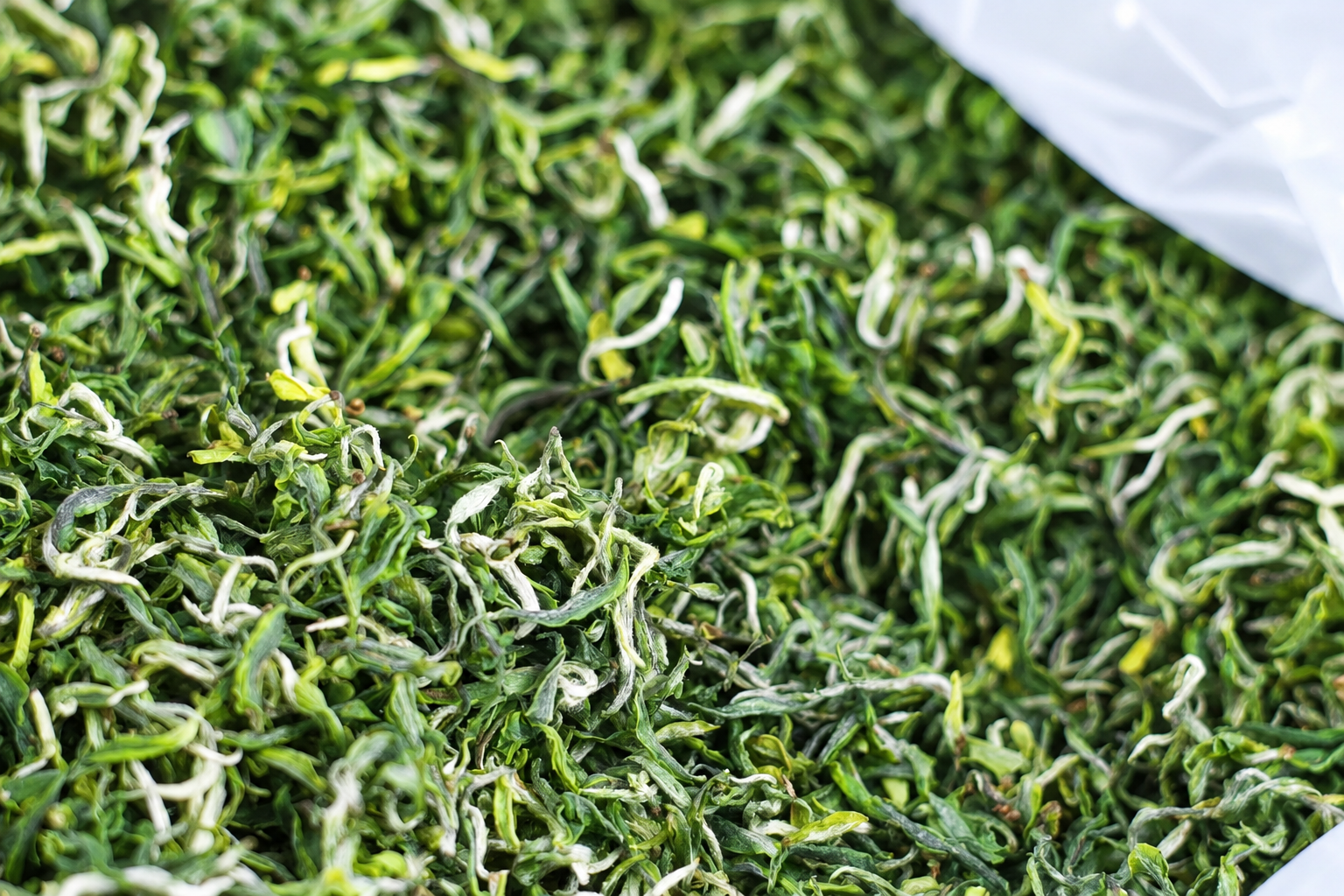
Once brewed, the liquor is clear and bright with a tender green tone. The dry leaf may look naturally rustic, but the character of the tea becomes clearer in the cup: fresh, sweet, light, and easy to drink.
Rustic Leaf, Fresh Cup
The hand-rolled dry leaves naturally vary in size, shape, and color. Fine tea hairs may also be visible — a natural feature of the tender spring material.
Use a gentler water temperature to bring out the tea’s fresh, sweet character without overwhelming its delicate aroma.
Brewing Guide
Tip: Use water at 85°C / 185°F. Please do not use boiling water.
Gift-Ready Tin and Gift Bag
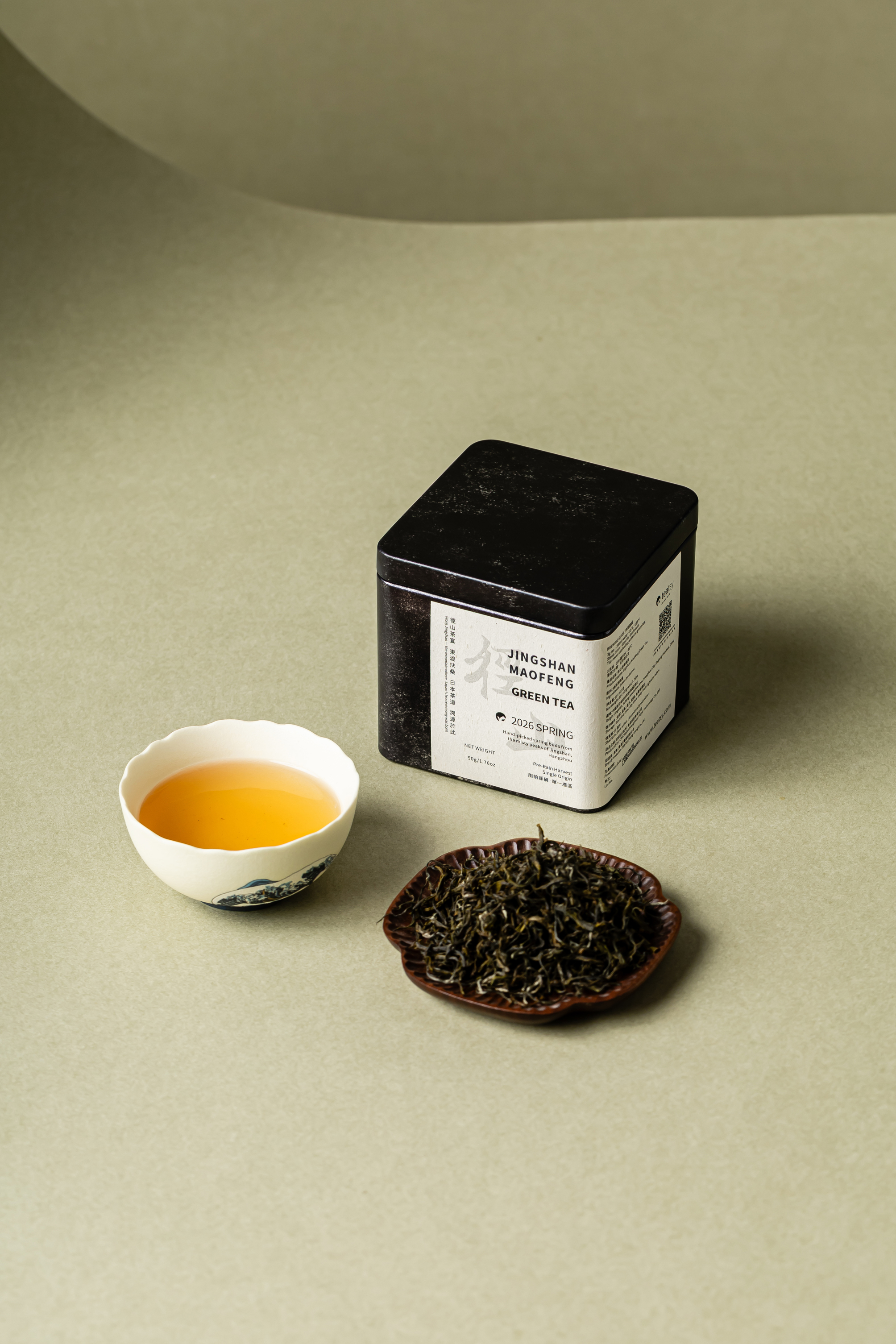
The tea comes in a metal tin with a TeaTsy gift bag, so it is ready to give as it arrives.
At 50 g, it is an easy size to start with if you are new to Chinese green tea, while still making a thoughtful gift for a birthday, a housewarming, or a friend who already drinks tea.
The tin is black and ivory, the same design we use across the range, with the tea name, harvest, and origin printed clearly on the label.
Independently Analyzed by ALS Germany
This batch was independently analyzed by ALS Germany GmbH.
The report identifies the submitted sample as Jingshan Maofeng Green Tea and records its condition as “A – Satisfactory.” In the residue screening, the report states that no positive residues with an established MRL were found above the reporting limit.
In practical terms, the screened residues that had an established MRL were not reported above the laboratory’s reporting limit for this batch. We do not describe the tea as “pesticide-free” or “zero-residue,” because this report does not support those claims.
FAQ
Q: What does this tea taste like?
A: Fresh and clean, with a gentle sweetness, a tender young-leaf aroma, and a bright finish. The liquor is clear with a light green tone, and the overall character is refreshing rather than heavy.
Q: How should I brew Jingshan Maofeng?
A: Use about 3 g of tea with 200 ml of water at 85°C / 185°F. Steep for around 2 minutes. The same leaves can be steeped up to three times.
Q: Can I use boiling water?
A: We would not recommend it. Water that is too hot can overwhelm the tea’s tender aroma and make the cup taste harsher. Water at around 85°C / 185°F is recommended.
Q: What is Jingshan Maofeng Green Tea?
A: A Chinese green tea from Jingshan, Hangzhou. This tin is from our 2026 spring harvest and is made from tender spring leaves using traditional green-tea processing, including hand rolling and a baked-green finishing process.
Q: Why are there fine white hairs inside the tin or among the tea leaves?
A: They come naturally from the tender spring buds. Fine tea hairs can loosen during processing, packing, and shipping, so you may notice them inside the tin or even floating in the brewed tea. They are not dust or mold and are a natural characteristic of the tea.
Q: Why do the dry leaves look naturally irregular rather than perfectly uniform?
A: The leaves are hand-rolled during processing rather than machine-shaped for cosmetic uniformity. As a result, natural differences in leaf size, curl, and shape remain visible from batch to batch. These variations are part of the tea’s traditional processing and do not affect how it brews.
Q: Is this tea pesticide-free?
A: We do not claim that this tea is pesticide-free or zero-residue. This batch was analyzed by ALS Germany GmbH. The report records the sample condition as “A – Satisfactory” and states that no residues with an established MRL were found above the reporting limit.
Q: How should I store the tea?
A: Keep the tin tightly closed and store it somewhere cool and dry, away from sunlight, heat, moisture, and strong odors. Close the lid promptly after each use.
Specifications
| Product Name | Jingshan Maofeng Green Tea |
| Tea Type | Green Tea |
| Harvest | 2026 Spring · Pre-Rain Harvest |
| Origin | Jingshan, Hangzhou, China |
| Ingredients | Green tea leaves |
| Net Weight | 50 g (1.76 oz) |
| Processing | Hand-rolled · Baked-green finishing process |
| Aroma | Tender, fresh, and lingering |
| Taste | Fresh, clean, and gently sweet |
| Liquor | Clear and bright with a tender green tone |
| Brewing Guide | 3 g tea · 200 ml water · 85°C / 185°F · 2 minutes |
| Recommended Infusions | Up to 3 |
| Packaging | Metal tea tin + TeaTsy gift bag |
| Independent Analysis | ALS Germany GmbH · Reported 31 August 2026 |
| Storage | Keep tightly sealed in a cool, dry place away from direct sunlight, heat, moisture, and strong odors. |
Important Customer Notice: Natural Tea Hairs and Rustic Leaf Appearance
Jingshan Maofeng is made from tender spring leaves, which naturally carry fine tea hairs. Some of these hairs may come loose during processing, packing, and shipping, so you may see them in the tin or floating in your cup. Natural differences in leaf size and shape are normal as well.
Because the leaves are hand-rolled rather than shaped for cosmetic uniformity, the dry tea may not look perfectly even or highly polished. These variations are natural characteristics of the tea and do not change how it brews.
Product photographs on this page are for reference. Individual tins may vary naturally in leaf size, shape, curl, color, and the amount of visible tea hairs.
Trusted by Our Tea Friends
The quality checks, guarantees, and press features behind every order.
Credit: happywifeyofj @instagram


.png?w=2933&h=1329)